

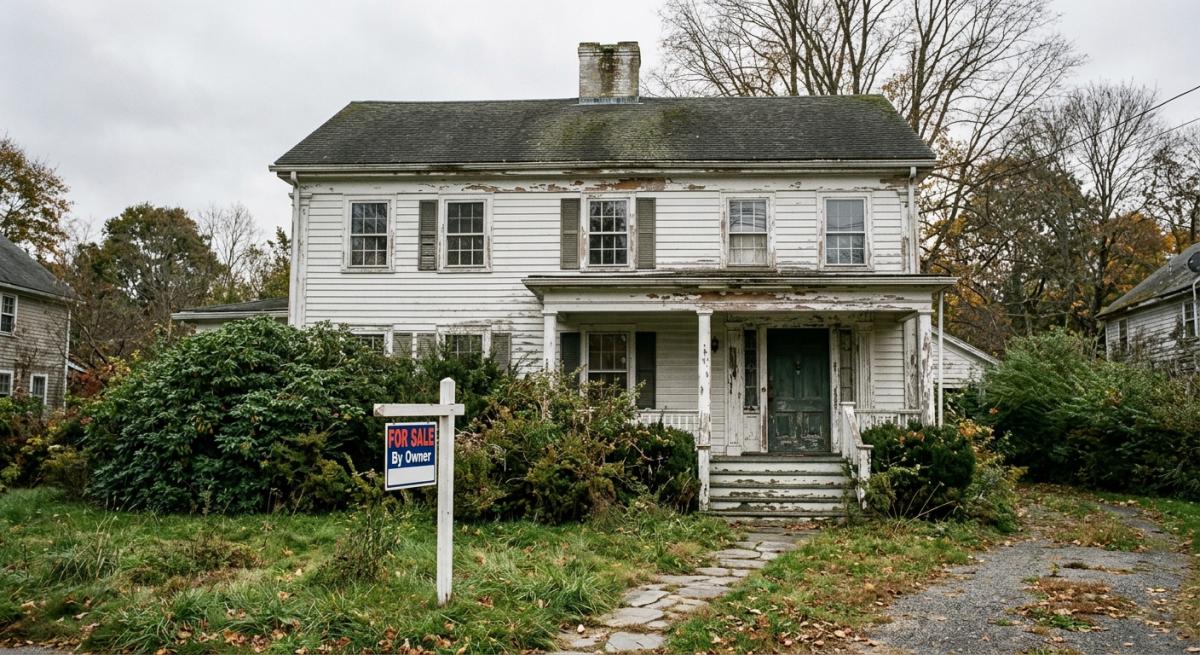
"As-Is" Doesn't Mean What Most Sellers Think It Means
Sellers use "as-is" to mean: I'm not fixing anything. Buyers read it and immediately wonder what's wrong. Those two interpretations don't fully align, and the gap between them is where deals get complicated.
In Connecticut, listing a home as-is does not release you from the disclosure requirement. You still must complete the Residential Property Condition Disclosure Report and disclose everything you know about the property's condition. What "as-is" tells buyers is that you are not willing to make repairs or issue credits based on what an inspection finds. It's a negotiating position, not a legal protection.
I had a seller who put serious money into a kitchen renovation. Beautiful work. The house still sat because the price was above what the comps supported. When we priced it correctly, it sold. The kitchen was not the problem. The price was the problem. The same dynamic applies in reverse with as-is: the condition isn't automatically the problem. The price is the lever that makes it work or doesn't.
When Selling As-Is Actually Makes Sense
There are situations where selling as-is is the right call. Not every situation - but enough that it's worth understanding when it fits.
Estate and inherited properties are often the clearest case. Heirs frequently don't know the property's full history, can't warranty its condition, and don't want to manage renovation projects. Selling as-is with transparent disclosure is cleaner and faster than trying to fix things you don't fully understand.
Major deferred maintenance is another case. If your home needs a roof, new windows, a new furnace, and a bathroom update all at once, you're looking at renovation coordination and capital outlay that may not return fully in the sale price. Some sellers in this situation are better off disclosing the condition, pricing it to reflect the work needed, and letting the right buyer - an investor or a handy owner-occupant - factor that into their offer.
Timeline pressure makes as-is more attractive. If you need to close in 30 days and don't have time for contractor bids, permits, and punch lists, taking the property to market as-is and accepting a lower price is a rational trade-off.
What as-is is not right for: sellers who have a home in good condition and just don't want to deal with inspection negotiations. In that case, "as-is" is a red flag that hurts your buyer pool without benefiting your net proceeds.
Who Actually Buys As-Is Properties in CT
Investors are the most common as-is buyers. They're looking for margin - they buy at a discount, renovate, and either resell or rent. They know what work costs, they move fast, and they don't need the home to be perfect. They also negotiate hard, because their business model requires a certain spread between what they pay and what the renovated property is worth.
Cash buyers make up a meaningful portion of as-is transactions - about 25 to 30% of CT home sales involve cash buyers overall, and that share is higher in the as-is segment. Cash buyers don't need an appraisal, don't have a lender setting conditions, and can close fast. That's worth something to sellers who want certainty over the highest possible number.
Owner-occupant buyers who want a project are the third category - people who specifically want to customize a home and prefer buying something they can renovate to their taste rather than paying for someone else's choices. These buyers exist in CT, especially in towns with strong underlying values where the renovation math works.
What you're giving up in an as-is sale is the broad conventional buyer pool - people using financing who want a home they can move into without major work. That pool is larger, and in a competitive CT market it's where bidding wars come from. When you remove those buyers from the equation, your ceiling drops.
How to Price an As-Is Home in Connecticut
Start with the comparable sales - what similar homes in similar locations have sold for in the last 90 days. Then work backwards from what a buyer would need to spend to bring your home to that comparable condition. If comparable homes are selling at $425,000 fully renovated and your home needs $60,000 in work, the math starts around $365,000 - and then the investor's margin comes on top of that.
Basically, the market doesn't pay full price for homes that need work. It pays full price for homes that are ready. The discount a buyer applies for condition reflects their real cost plus the inconvenience of managing a renovation. That discount is larger than sellers usually expect.
The common mistake is pricing an as-is home against fully renovated comparables and wondering why it's not selling. It won't sell at that price. Buyers aren't paying renovation value for a home that still needs the renovation.
One more thing: the market can see past condition when the price is right. I've watched homes with real problems sell in days because they were priced where an investor could make the numbers work. And I've watched as-is homes sit for months because the seller wanted too much and buyers kept doing the math and walking. Right price, right buyer, right timeline. That's how as-is works in Connecticut.
The Disclosure Question: You Still Have to Tell Them
Connecticut sellers must provide the Residential Property Condition Disclosure Report to buyers. If you don't, the buyer gets a $500 credit at closing - but the disclosure obligation doesn't disappear just because you listed as-is.
This is actually to your benefit. A seller who discloses everything known about the property and prices accordingly is in a much cleaner position than one who stays vague and then deals with post-inspection renegotiation. Buyers who see a transparent disclosure can make an informed offer. Buyers who don't know what they're getting into make offers, then find out during inspection, then either renegotiate or walk.
Transparency upfront sets the price negotiation where it belongs - before you're under contract, not after. As-is with full disclosure is a defensible, clean strategy. As-is with minimal disclosure is a negotiation you haven't had yet.
Frequently Asked Questions
Does selling as-is in Connecticut mean I don't have to disclose defects?
No. Connecticut requires sellers to complete a Residential Property Condition Disclosure Report regardless of how the property is listed. As-is means you won't make repairs or provide credits based on inspection findings - it doesn't mean you're exempt from disclosing what you know. If you fail to provide the disclosure, the buyer receives a $500 credit at closing, but your liability for known undisclosed defects doesn't go away.
How much less should I expect to get selling my CT home as-is?
It depends on what the home needs. A home that's cosmetically dated but mechanically sound might sell at 5 to 10% below fully updated comparable homes. A home with significant deferred maintenance - roof, HVAC, foundation - might sell at 15 to 25% below comparable updated homes, because buyers are pricing in both the cost of the work and the risk and inconvenience of managing it. The right number starts with the comps and works backward from the real cost of the work needed.
Can I still get a good price selling my Connecticut home as-is?
Yes - if it's priced correctly. As-is homes that are priced where the math works for investors and project buyers often sell quickly and competitively within that buyer pool. The mistake is pricing an as-is home against fully renovated comparables. Price it honestly against the condition, and the right buyers will find it.
Will a buyer's lender allow them to buy a CT home as-is?
It depends on the loan type and the severity of the issues. FHA and VA loans have strict property condition requirements - a home with a failing roof, significant water damage, or peeling lead paint can be ineligible for FHA or VA financing. Conventional loans are more flexible, though lenders still won't finance homes with major habitability issues. As-is sales in serious condition often close with cash buyers or buyers using renovation loans like FHA 203(k) or conventional HomeStyle programs.