

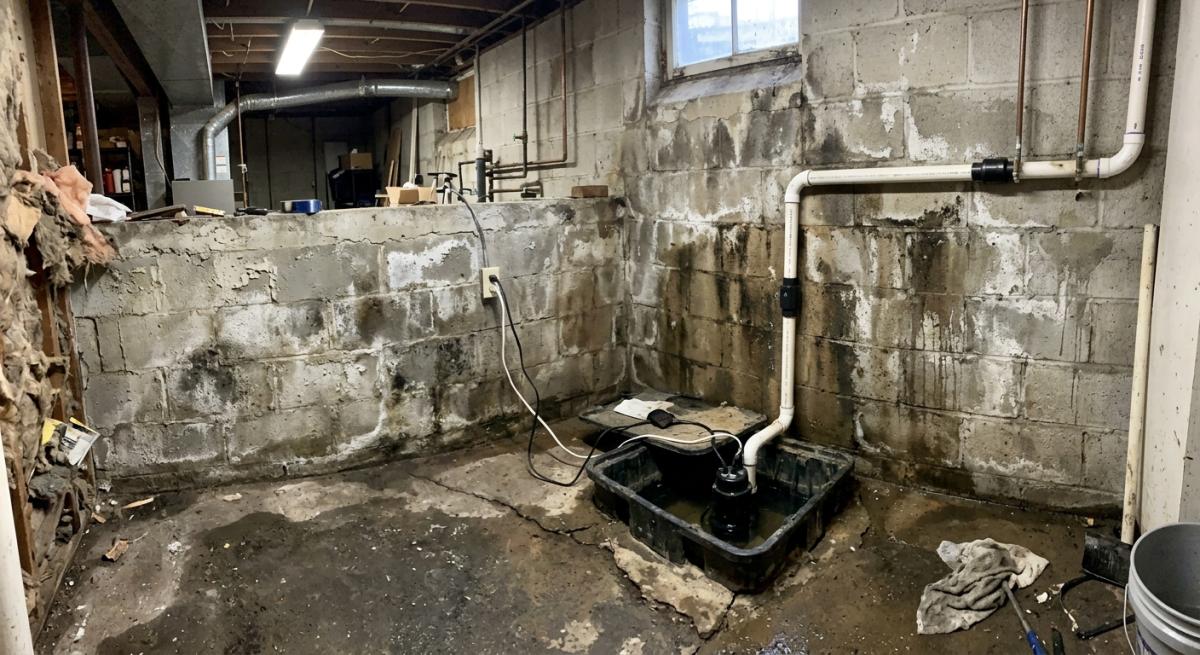
Why Connecticut Basements Get Wet
Connecticut gets real weather. Heavy spring rains, rapid snowmelt, and clay-heavy soil that doesn't drain well - those three things together create the conditions for wet basements that show up in CT inspection reports constantly. This is not a sign of a defective home. It's a consequence of building basements in New England.
But not all wet basements are the same problem, and the type of water intrusion determines the right fix. A homeowner who waterproofs the interior when the real issue is improper grading has spent money without solving the problem. Understanding which category you're dealing with is the starting point.
Three distinct sources cause most basement moisture in Connecticut homes:
- Surface water and improper grading - Ground around the foundation slopes toward the house instead of away. Water pools near the foundation and finds its way in through cracks or porous block.
- Window well flooding - Basement windows sit below grade, and without adequate drainage below the well, heavy rain fills them and seeps in under the frame.
- Hydrostatic pressure / high water table - The water table rises during wet seasons, and groundwater pushes through the foundation wall or slab from below. This one is the most difficult and expensive to address permanently.
Surface Water Problems: Often the Cheapest Fix
If water comes in at the base of the wall during heavy rain - and only during or right after heavy rain - the likely cause is surface water. Rain hits the ground near your foundation, the soil slopes toward the house, and water migrates toward the lowest point: your basement.
The fix often starts outside, not inside. Regrading the soil around the foundation so it slopes away from the house, extending downspout extensions so they discharge further from the structure, and adding or clearing French drains are all exterior solutions that address the source of the problem rather than its symptoms.
These fixes can be done in stages. Extending downspouts costs almost nothing. Regrading a foundation perimeter costs more but is a landscaping job, not a structural one. A buyer who sees surface water staining but no structural crack in the foundation wall is often looking at a manageable grading problem, not a serious waterproofing issue.
The giveaway: water appears at the junction of the wall and floor, or through a low crack in a block foundation wall. No water visible during dry periods.
Hydrostatic Pressure: The Harder Problem
When water pushes through the foundation from the outside under pressure - not because of where surface water flows, but because the water table is high enough to saturate the soil around the foundation - you're dealing with hydrostatic pressure. This is more common in low-lying areas, properties near streams or wetlands, and parts of Connecticut with naturally high water tables.
The symptoms: water appears along the base of foundation walls, sometimes with white mineral deposits (efflorescence) that show water has been moving through the concrete over time. In severe cases, water comes up through the floor slab itself.
Interior drainage systems are the most common solution: a perimeter drain channel installed around the inside edge of the basement floor, connected to a sump pit and sump pump. The system doesn't stop water from entering the foundation - it manages it, capturing the water and pumping it out before it becomes a problem. Done correctly, this works well. Done incorrectly or with an undersized pump, it's a recurring headache.
Exterior waterproofing - excavating around the foundation, applying a waterproofing membrane, and installing exterior drain tile - is more thorough and more expensive. For most residential situations in Connecticut, an interior drainage system with a quality sump pump handles the problem adequately.
What Home Inspectors Flag — and What It Actually Means
Nearly every older home inspection in Connecticut mentions basement moisture in some form. The question isn't whether it appears in the report - it's what kind of finding it is.
Efflorescence (white mineral deposits on block or concrete walls) indicates water has moved through the wall at some point. It's worth noting but not alarming on its own. Active water staining - dark discoloration that is damp to the touch, or actual water on the floor - is more significant.
Structural cracks in poured concrete walls or block foundations warrant closer attention. Horizontal cracks in block foundations can indicate lateral soil pressure and should be evaluated by a structural engineer, not just a waterproofing contractor. Vertical or diagonal cracks in poured concrete are more common and often less serious, though they still need to be sealed.
A good inspector distinguishes between old staining and active moisture. If you're not sure from the report, ask for clarification or bring in a waterproofing contractor during your inspection period to give you a second opinion and a cost estimate before you commit.
What I Tell Buyers When the Report Shows Basement Moisture
Don't panic and don't walk. Basement moisture in Connecticut is so common that walking away from every home that shows evidence of it would eliminate most of the older housing stock. The question is what it costs to manage correctly and whether that cost is reflected in the price.
Get a waterproofing contractor in during your inspection period. Not a general contractor - a specialist. Get a written assessment of the cause and a written estimate of the fix. That number becomes a negotiating data point: either ask for a credit, ask the seller to remediate, or factor it into your final offer.
A home that has had a professionally installed interior drainage system with a sump pump and no active moisture issues since is actually a known quantity. I mean, you know the problem was identified and addressed. That's better than a house that shows no staining because it was never wet - and then the first heavy rain reveals a drainage problem the seller genuinely didn't know about.
The worst basement scenarios involve ignored structural cracks, finished basement walls that hide active moisture, and no sump pump in a house that clearly needed one. The best scenarios are proactively managed drainage with documentation of what was done and when.
Frequently Asked Questions
How much does basement waterproofing cost in Connecticut?
Interior drainage system installation (perimeter drain channel plus sump pit and pump) typically runs from several thousand dollars to upward of $15,000 depending on the basement size and severity of the issue. Exterior waterproofing - full excavation around the foundation - costs significantly more and is less commonly necessary for residential properties. Simpler fixes like regrading and downspout extensions can cost a few hundred dollars and sometimes solve the problem entirely. Get a specialist assessment before assuming you need the more expensive solution.
Is a wet basement a dealbreaker when buying in Connecticut?
Not automatically. Basement moisture is extremely common in Connecticut's older housing stock and is manageable in most cases. The important questions are: what type of moisture intrusion is it, what does remediation cost, and is that cost reflected in the price? A home with active structural cracking and water intrusion that the seller hasn't addressed is a bigger concern than one that had a drainage system professionally installed years ago and has been dry since.
What is efflorescence and does it mean my CT basement has a problem?
Efflorescence is the white, chalky mineral deposit left on concrete or masonry walls when water moves through them and evaporates, leaving dissolved minerals behind. It indicates water has passed through the wall at some point. It's worth noting but is not always a sign of an active or serious problem. Recent, ongoing efflorescence combined with damp walls or actual water pooling is more significant than old staining on an otherwise dry foundation.
Should I finish my Connecticut basement before selling?
Only if the moisture situation is fully under control and has been for a meaningful period of time. A finished basement that conceals moisture problems is a disclosure issue and can result in legal liability after the sale. If the basement is dry, has a functioning drainage system, and the work is done with permits, a finished basement can add value. A finished basement done without permits or over an unaddressed moisture problem creates more problems than it solves.