

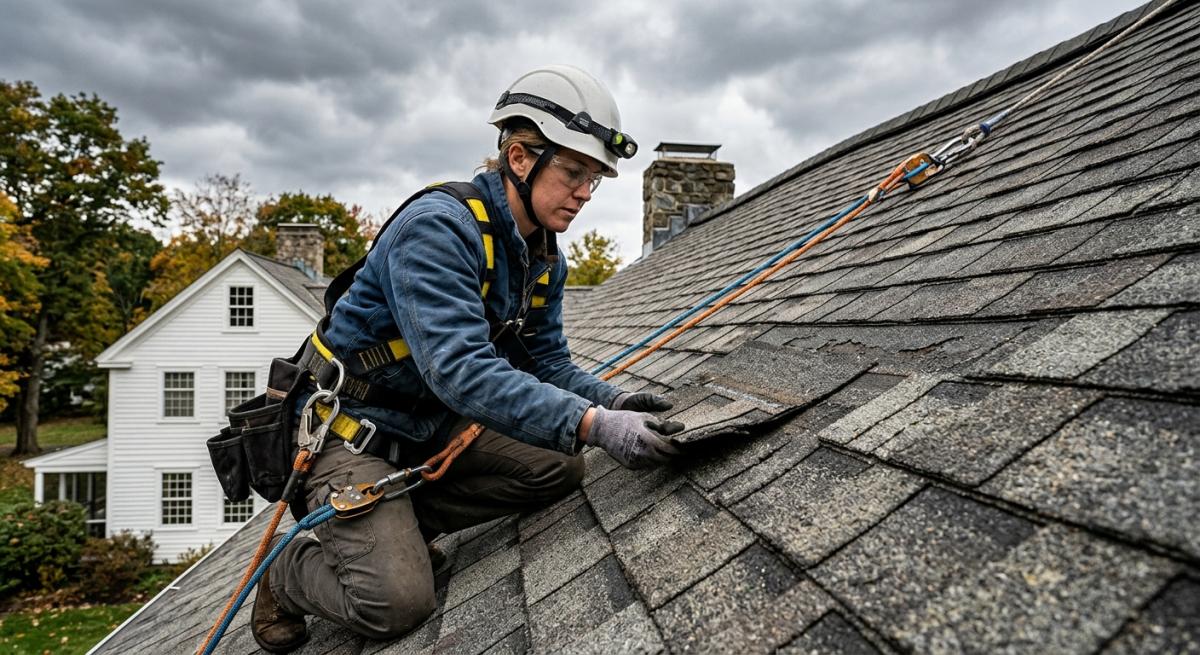
CT Roofs Age Differently Than They Do in Other Places
A 25-year asphalt shingle rated for 30 years in Florida is not the same roof in Connecticut. The freeze-thaw cycles, the ice dams, the weight of wet snow on shallow-pitched sections, the summer heat baking dark shingles - Connecticut weather compresses roofing lifespans in ways that the manufacturer's warranty doesn't fully account for.
A 3-tab asphalt shingle roof in Connecticut has a realistic lifespan of 15 to 20 years. Architectural (dimensional) shingles - the thicker, more layered shingles that have become standard - hold up better and typically last 20 to 30 years in CT conditions, depending on attic ventilation, installation quality, and sun exposure. Metal roofing significantly outlasts asphalt but costs more upfront. Cedar shakes, common on older CT colonials, require maintenance that most homeowners don't do consistently and end up failing earlier than expected.
These ranges matter because they determine when a roof becomes a transaction issue. A buyer who discovers a 22-year-old 3-tab shingle roof on a home they're about to purchase is looking at near-term replacement. That's a cost they'll factor into their offer.
How to Read What Your Roof Is Telling You
You don't need to get on the roof to get an initial read. Walk around the perimeter with binoculars or use a drone photo if you have access. You're looking for:
Curling shingles - edges that turn up (cupping) or centers that bow up (clawing). Both indicate age and moisture cycling.
Missing granules - bare or discolored patches on shingles, often visible as dark spots. Heavy granule loss in gutters after a storm is another indicator.
Missing or lifted shingles - any gaps in the shingle field.
Damaged flashing - the metal at valleys, chimneys, skylights, and wall intersections. Failed flashing is a more immediate leak risk than aging shingles.
Sagging sections - any visible dip or sag in the roof plane indicates a structural issue, not just a surface shingle problem.
Inside, water stains on attic sheathing or ceiling stains in upper rooms are the definitive sign that water is getting through. By the time interior staining appears, the roof has been leaking for some time.
What Replacement Actually Costs in Connecticut
Full roof replacement on a typical Connecticut colonial - 2,000 to 2,500 square feet of living space, standard pitch, one layer of existing shingles - typically runs from $10,000 to $20,000 for architectural asphalt shingles installed. Steeper pitches, second layers of shingles that need tear-off, valleys and complex geometry, and chimney flashing all add to the number.
High-end options - metal roofing, premium synthetic slate, or heavy architectural shingles - can push replacement into the $25,000 to $50,000 range for the same-size house. Those materials earn their premium in longevity, but the payback timeline is long.
Partial repairs - replacing sections, addressing flashing, resealing penetrations - are appropriate when the overall roof has life remaining and specific areas are failing. A good roofer gives you a straight assessment of what needs replacement versus what can be managed with repairs. A roofer who quotes full replacement on a 12-year-old architectural shingle roof without discussing repair options first deserves a second opinion.
Worth knowing: Get three quotes from licensed Connecticut roofing contractors. The range often surprises people - quotes on the same house can vary by $5,000 to $8,000. Verify licensing and insurance, check reviews, and ask specifically about what's included: tear-off, underlayment replacement, flashing, and disposal. Those variables explain most of the price difference between contractors.
The Real Estate Angle: When Roofs Kill Deals
A roof that is clearly at or past the end of its life creates problems in CT real estate transactions regardless of which side of the table you're on. Buyers who see a worn roof know they're looking at a near-term capital expense. Their offer reflects that, or their lender balks.
FHA and VA loans have minimum property condition requirements that include functional roofing. An appraiser who notes a significantly deteriorated roof on an FHA or VA transaction can require evidence of condition or repairs before the loan can fund. This catches sellers off guard more than almost any other inspection finding.
For sellers: if your roof is within a few years of end-of-life, proactive replacement before listing removes a negotiation point and can expand your buyer pool to include FHA and VA buyers. Whether that math makes sense depends on the replacement cost versus the expected sale price impact. Run both scenarios with your agent before deciding.
For buyers: a roof that needs replacement in 2-3 years is not automatically a dealbreaker. It's a cost you need to negotiate around - either a price reduction, a seller credit, or a seller-funded replacement before closing. Getting a roofing contractor's written assessment during the inspection period gives you the documentation to make that ask with specifics, not estimates.
What Adds Life and What Shortens It
Attic ventilation is the single biggest factor in roof longevity beyond installation quality. A hot, poorly ventilated attic bakes shingles from below in summer and contributes to ice dam conditions in winter. If you have a roof that's aging faster than expected, attic ventilation is worth evaluating alongside shingle condition.
Overhanging trees drop debris, hold moisture on the shingle surface, and accelerate algae and moss growth. Dark streaking on CT roofs is usually algae - mostly cosmetic but it does degrade shingles over time. Zinc strips at the ridge or algae-resistant shingles slow it down.
Proper flashing maintenance - resealing around chimneys and penetrations every 5-7 years - extends the effective life of a roof by preventing the most common leak entry points from opening up before the shingles themselves are done. A roofer who includes flashing inspection and minor resealing in a maintenance visit is doing you more service than one who just looks at shingle condition.
Bottom line: A Connecticut asphalt shingle roof has a realistic lifespan of 15-30 years depending on type and conditions. Know how old your roof is, read the signs annually, and don't wait until you have interior water staining to address it. Early action is almost always less expensive than emergency replacement after a leak.
Frequently Asked Questions
How long does a roof last in Connecticut?
3-tab asphalt shingles typically last 15-20 years in Connecticut's climate. Architectural (dimensional) shingles generally last 20-30 years. Metal roofing can last 40-70 years but costs significantly more upfront. Cedar shakes last 20-30 years with proper maintenance, but the maintenance requirement is higher than most homeowners provide. Connecticut's freeze-thaw cycles, ice dam risk, and temperature extremes shorten lifespans compared to more temperate climates.
How much does roof replacement cost in Connecticut in 2026?
A full replacement with architectural asphalt shingles on a typical Connecticut colonial (2,000-2,500 square feet of living space) generally runs $10,000 to $20,000 installed. Steeper pitches, multiple shingle layers requiring tear-off, complex valleys, and premium materials increase the cost. Get at least three quotes from licensed Connecticut roofing contractors — price variation between contractors on identical work is common and significant.
Can I sell my Connecticut home with a roof that needs replacement?
Yes, but it will affect your buyer pool and your price. FHA and VA loans have minimum property condition requirements that can include roofing — a significantly deteriorated roof may prevent certain financing types from going through. Conventional buyers will factor replacement cost into their offer. You can either price it in, offer a seller credit, or replace it before listing. Which approach makes more financial sense depends on the specific roof and your expected sale price.
Does homeowners insurance cover roof replacement in Connecticut?
It depends on the cause. Insurance covers sudden damage from covered perils — storm damage, fallen trees, hail. It does not cover gradual deterioration or a roof that simply aged out. Many insurance companies in Connecticut are also requiring roof age documentation before issuing or renewing policies, and some require replacement if a roof exceeds a certain age. Check your policy and talk to your insurance agent before assuming coverage.