

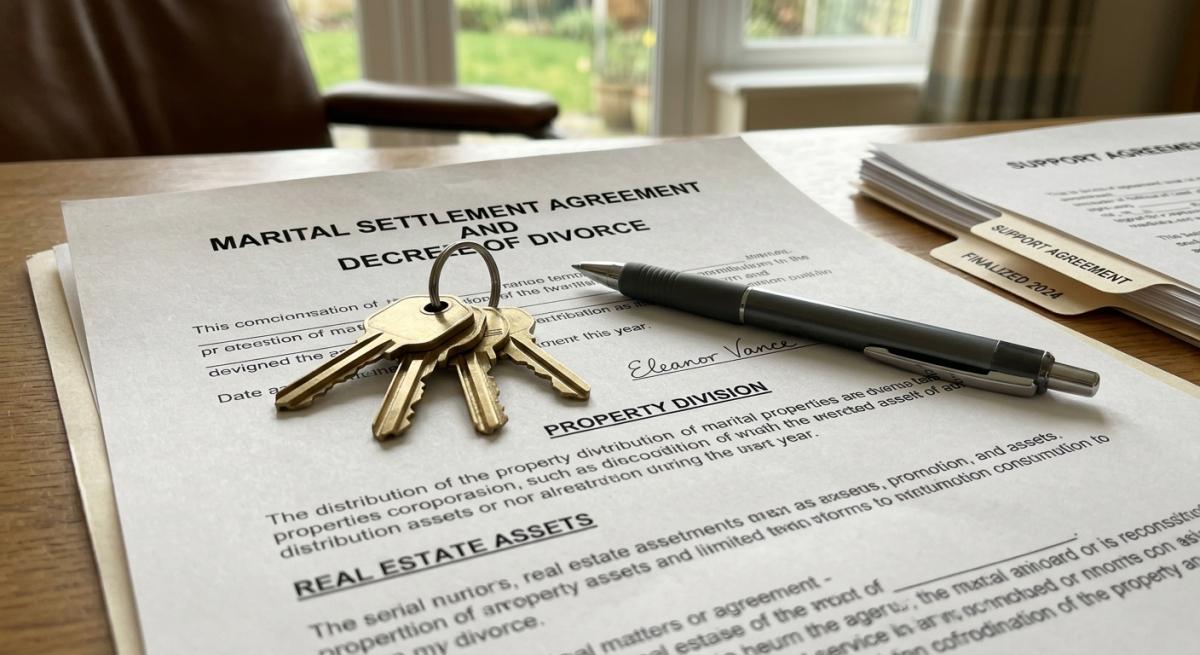
The House Is Usually the Biggest Issue
In most Connecticut divorces involving a jointly owned home, the house becomes the central negotiation point. It's often the largest asset, it has emotional weight that other assets don't, and it requires both parties to cooperate in ways that can feel impossible when a marriage is ending.
There are three things that can happen to the house in a CT divorce: it gets sold and proceeds are divided, one spouse buys out the other and keeps it, or one spouse stays in the house temporarily (often until children finish school) before eventually selling. Each path has different implications for timing, taxes, and the mechanics of what both parties have to do.
Which path you take depends on what's negotiated between the parties - or ordered by the court if negotiations break down. But regardless of which path, the home needs to get appraised, both parties need to agree on major decisions affecting the property, and the mechanics of either a sale or a buyout require cooperation from both sides. That cooperation is what makes divorce-related real estate transactions more complicated than standard ones.
What Connecticut Divorce Law Says About Marital Property
Connecticut is an equitable distribution state. That means marital property - which typically includes the marital home regardless of whose name is on the deed - is divided fairly but not necessarily equally. A judge has discretion to consider the length of the marriage, each spouse's earning capacity, who contributed what, and other factors when determining how proceeds should be split.
50/50 is common but not guaranteed. If one spouse contributed significantly more to the purchase or improvements, or if there are other assets being divided simultaneously, the split on the house may be adjusted as part of a broader settlement.
If the home was owned by one spouse prior to marriage or received as an inheritance, it may have a different status as separate property - though this gets complicated when marital funds were used for mortgage payments or improvements. This is exactly the kind of question that requires a Connecticut divorce attorney, not a real estate agent.
The Practical Problem: Two Decision-Makers Who Don't Agree
Every decision in a home sale normally requires the seller's agreement: listing price, which offer to accept, what repairs to make, when to close. In a divorce sale, there are two sellers - and they may not agree on any of those things.
Pricing is the most common friction point. One spouse may want to price aggressively to sell quickly; the other may want to hold out for a higher number. The carrying costs of maintaining the property - mortgage, taxes, utilities, insurance - continue while the parties argue. Those costs typically come out of the eventual sale proceeds or must be allocated between the parties during the delay. Either way, disagreement is expensive.
The selection of a real estate agent is another common sticking point. Both parties need to be comfortable with the agent representing their shared interest. In practice, this usually means a neutral agent neither spouse has an existing relationship with. Some divorce attorneys specifically recommend this - an agent both parties agree to, who reports equally to both, and who communicates with both rather than through one spouse.
Long story short: the more the two parties can align on the basics before engaging an agent, the less messy the process gets. Your attorneys can help structure an agreement on pricing range, decision-making authority, and timeline before the listing goes live.
What Happens If One Party Won't Cooperate
Both spouses are on the deed. That means both spouses must sign the deed at closing to transfer title. One party cannot force a sale unilaterally - and one party cannot block a court-ordered sale indefinitely.
If a divorce decree orders the property sold, both parties are legally required to cooperate with the sale. A spouse who refuses to sign documents, refuses access for showings, or otherwise obstructs a court-ordered sale can be held in contempt of court. Courts in Connecticut have the authority to appoint a commissioner to sign on behalf of a non-cooperating party in extreme cases.
This is an uncommon situation but not a theoretical one. If you're concerned about a non-cooperating spouse, that conversation belongs with your attorney well before the listing goes live - not after you have an accepted offer and the closing is scheduled.
Tax and Equity Considerations When Selling
If the home has appreciated significantly, the capital gains exclusion on primary residences ($250,000 per person, $500,000 for a married couple filing jointly) may come into play. Generally, both spouses qualify for the exclusion if they have each owned and used the home as a primary residence for at least 2 of the last 5 years - even if they're no longer living together at the time of sale. The timing of the sale relative to the divorce finalization affects how this exclusion applies.
When a buyout happens instead of a sale, the spouse who keeps the property refinances into their own name and pays the other spouse their share of the equity. The challenging part: getting approved for a mortgage on one income after a divorce that may have also generated legal fees and financial disruption. Lenders will look at the debt-to-income ratio on the post-divorce income, and what was affordable on two incomes may not be affordable on one.
One thing that catches people off guard: Connecticut's conveyance tax applies to transfers between divorcing spouses when those transfers are part of a divorce settlement. There are some exemptions that may apply, but this is another question that requires a CT attorney who handles both real estate and family law.
Frequently Asked Questions
Can one spouse sell the house without the other's permission in Connecticut?
No. If both spouses are on the deed, both must sign the transfer documents at closing. Neither party can unilaterally sell a jointly owned property. However, if a court orders the property sold as part of a divorce decree, both parties are required to cooperate — and the court has authority to compel cooperation or appoint a commissioner to act in place of a non-cooperating spouse.
Who pays the mortgage on a marital home while the divorce is pending in CT?
This is typically addressed in a temporary court order or a written agreement between the parties at the start of the divorce process. Often the spouse living in the home is responsible for the mortgage during the pendency. If the home is vacant, the parties typically split the carrying costs. Whatever is paid out of marital funds is usually tracked and factored into the final property division. Your attorney should address this early — an unpaid mortgage harms both parties equally.
What if both spouses want the house in a Connecticut divorce?
Both spouses wanting to keep the house typically resolves through negotiation — whoever wants the house buys out the other at an agreed-upon value — or through a court-ordered appraisal and determination. The spouse who keeps the property must refinance the mortgage into their own name. If neither can qualify for the mortgage alone or agree on a value, the court can order the property sold and proceeds divided.
How does the home sale affect my Connecticut taxes during divorce?
If the home is sold during or shortly after divorce, the federal capital gains exclusion may still apply — up to $250,000 per spouse if both have owned and lived in the home for 2 of the last 5 years. Connecticut follows federal tax treatment on capital gains. If one spouse receives the property through a buyout in the divorce settlement, that transfer is generally not taxable at the time of transfer, though the receiving spouse inherits the cost basis. Consult a CPA and your attorney about the specific tax implications for your situation.