

October Is Not a Suggestion
Every year in Connecticut, homeowners watch the leaves fall and think they'll get to the fall checklist soon. Then it's November. Then there's a hard freeze. Then a pipe that hadn't been winterized properly bursts, or the furnace that needed a tune-up in October fails on a January night, or the gutters backed up with leaves and ice dams formed along the roofline in the first major snowstorm.
The fall maintenance window in Connecticut runs from mid-September through early November. After that, some of the most important tasks become harder, more dangerous, or more expensive. A gutter cleaning in October is a half-day project. A gutter cleaning while frozen leaves are welded in place in December is something else entirely.
This is not a comprehensive list of every possible home maintenance task. It's the list that matters most for Connecticut winters - the things that, if skipped, generate the calls I hear from homeowners in February who wish they'd dealt with it in the fall.
Heating System First
The furnace or boiler is the single most important fall task for Connecticut homeowners. Schedule a tune-up in September or early October - HVAC companies book up fast once cold weather hits and everyone realizes they should have called six weeks ago. A maintenance visit catches issues before they become emergency calls, replaces filters that have been running all summer, and ensures efficiency going into heating season.
If you have a forced-air system, replace the filter. It's a $15 task that affects both air quality and system efficiency. If you haven't changed it since spring, it's overdue.
For homes with oil heat, schedule delivery before you need it urgently. October oil prices are typically more predictable than December prices when everyone is ordering at once. For gas heat, the annual tune-up is still the priority - confirm the heat exchanger is clean and the pilot or igniter is functioning correctly.
Check your chimney and fireplace if you have one. Connecticut requires chimney cleaning and inspection if you use a wood-burning fireplace or wood stove - creosote buildup is a fire hazard, and the inspection catches any structural issues with the flue before you start burning.
Exterior: The Water-Related Tasks
Everything on the exterior in fall is fundamentally about water management. Water that can't drain, can't flow away from the house, or sits against materials that expand in freezing temperatures is the source of most winter damage.
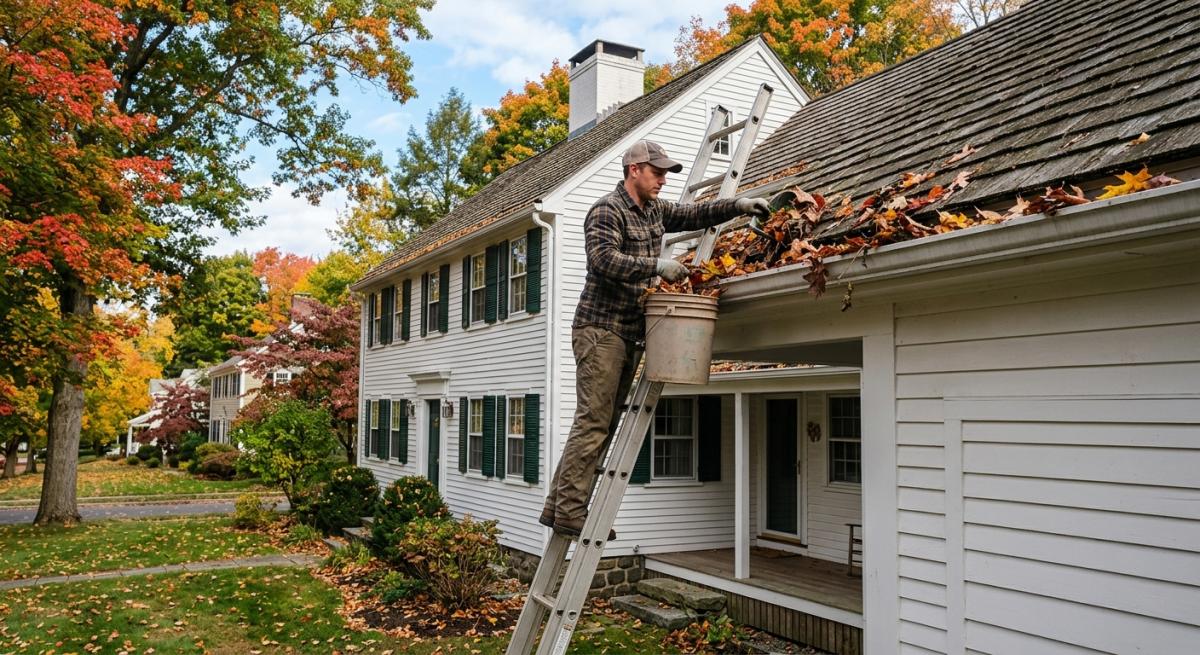
Gutters and downspouts - Clean after the leaves are down, not before. Mid-to-late October in most of Connecticut, depending on your trees. Clear all debris from gutters, flush with a hose to confirm downspouts aren't blocked, and verify downspout extensions are directing water at least 4-6 feet away from the foundation. Clogged gutters in Connecticut winters lead directly to ice dams, which lead to water intrusion under roofing materials.
Hose bibs and irrigation systems - Shut off exterior water supply valves from inside the house before the first hard freeze. Drain garden hoses and store them. If you have an irrigation system, it needs to be blown out with compressed air - most irrigation companies schedule fall blowouts in October, and they book quickly.
Grading check - Walk around the foundation and look at where soil and mulch sit relative to the foundation. Mulch piled against the siding or foundation is both a moisture trap and a pest invitation. Regrade or pull mulch back 6 inches from the foundation.
The Roof, Attic, and Windows
If you haven't had your roof inspected in the last few years, fall is the right time. Shingles that are curling, cracking, or missing granules are vulnerable to CT winter conditions - ice and snow loading on compromised shingles accelerates deterioration and increases leak risk. A roofing contractor can do a quick visual inspection and identify whether anything needs immediate attention before winter.
The attic is connected to the roof in an important way: adequate attic insulation and ventilation reduce the risk of ice dams. Ice dams form when heat from the living space warms the roof deck, melts snow, and the runoff refreezes at the cold eaves. That backed-up ice can force water under shingles. If you had ice dam problems last winter, fall is the time to assess the attic insulation situation.
Check window and door seals. Run your hand around the perimeter of windows and exterior doors on a cold day - air movement indicates a failed seal or weatherstripping. Replacing weatherstripping is a low-cost, high-impact fix for both comfort and heating cost. Caulk any gaps around window frames where caulking has cracked or separated from the frame.
The Stuff Most People Forget
Smoke and carbon monoxide detectors - test them, replace batteries, and confirm you have CO detectors within 10 feet of every sleeping area. Connecticut law requires CO detectors in residential properties. Heating season is when CO incidents spike, because furnaces, fireplaces, and portable heaters are all running.
Stock your emergency kit before you need it: a battery backup for the sump pump if you have one, extra batteries for flashlights, a generator if you're in an area with frequent power outages, and a supply of rock salt for ice management around stairs and walks.
If you have any outdoor furniture, fire pits, or equipment that needs winter storage or covering, October is the time to handle it. Furniture cushions left out through a Connecticut winter won't survive the freeze-thaw cycles. Gas grills should be disconnected and their covers secured.
Long story short: the fall list is mostly about water, heat, and seals. Address those three categories and you'll get through Connecticut winters with significantly fewer surprises than the homeowner who skipped October.
Bottom line: Connecticut fall maintenance is a two-month job. Prioritize the heating system in October, gutters after the leaves drop, and water shutoffs before the first hard freeze. Everything else follows from those three.
Frequently Asked Questions
When should I schedule furnace maintenance in Connecticut?
September or early October is ideal. HVAC companies in Connecticut get extremely busy once temperatures drop and homeowners who skipped maintenance start having problems. Scheduling in September ensures you get your preferred time slot, avoids emergency pricing, and gives the technician time to order any parts if something is needed. Don't wait until November.
When should I clean my gutters in Connecticut?
After the leaves have fallen - typically mid-to-late October in most of Connecticut, though it varies depending on what trees you have. Cleaning too early means you'll need to do it again once the rest of the leaves drop. Waiting too long means you're cleaning in colder, less pleasant conditions and risk clogged gutters going into the first freeze. Mid-October to early November is the right window for most CT homeowners.
Do Connecticut homeowners need to blow out their irrigation systems?
Yes, if you have an in-ground irrigation system. Water left in irrigation lines will freeze and can crack pipes and fittings. Blowout should be done before the first hard freeze, typically in October. Most irrigation companies in Connecticut schedule fall blowouts and book quickly once fall arrives - schedule it in September to ensure availability.
What causes ice dams in Connecticut homes and how do I prevent them?
Ice dams form when heat from the living space escapes into the attic, warms the roof deck, melts snow, and the water refreezes at the cold eaves. The water backs up under shingles and can cause leaks. Prevention comes from the inside: adequate attic insulation to keep heat in the living space, and adequate attic ventilation to keep the roof deck cold. If you had ice dams last winter, have an insulation contractor evaluate your attic before the next heating season.