

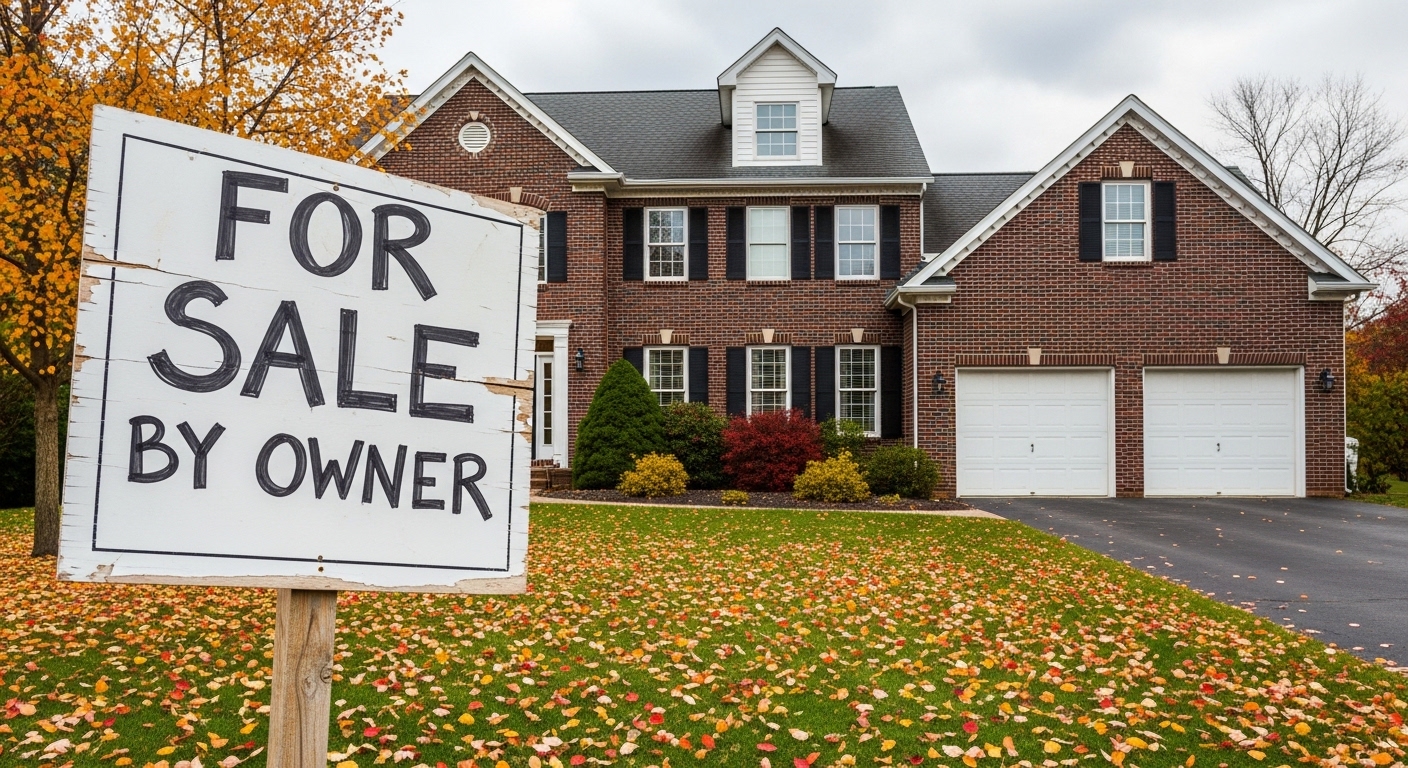
The 60-Day Number Is Not Neutral
In Connecticut, a well-priced home sells in 25 to 45 days. Maybe a little longer in winter, faster in a hot spring market. Sixty days means something specific is wrong - and the longer you wait to figure out what it is, the harder it gets to fix.
Here's what most sellers don't realize: the first two weeks on the market are the most valuable. The buyers who've been searching for months - pre-approved, watching alerts, ready to move - those people see your listing the day it goes live. If the price or photos turn them off, they move on. They don't come back. That traffic is gone.
By 60 days, you're no longer dealing with ready buyers. You're dealing with slower ones, more skeptical ones, or buyers who are specifically looking for a deal because they can see you've been sitting. That's a different negotiation. A worse one.
And there's something nobody likes to hear: buyers look at days on market. When they see 60, the first question isn't "I wonder what's great about this house." It's "I wonder what's wrong with it." That assumption doesn't go away just because you drop the price. You're carrying the stigma now whether you want to or not.
Price Is the Problem Most of the Time
I tell every seller the same thing: price is the only reason a home sits. Every time. No exceptions. If the price matches the condition and the location, it sells.
FSBO sellers tend to overprice - not because they're dishonest, but because they're working from incomplete information. Most price off Zillow. I understand why. It's free, it gives you a number, and it feels like research. But Zillow is a starting point, never the answer. I've seen it off by a few thousand. I've seen it off by forty thousand in either direction. It doesn't walk through your house. It doesn't account for the highway noise behind the yard, the new roof, the kitchen that was redone last year. It runs a model. That's not a valuation.
The other thing that skews FSBO prices is renovations. I had a seller once who put serious money into a kitchen - beautiful work. Buyers walked through, complimented the kitchen, and left without offering. The house sat. Eventually the price came down to where the comps actually supported it, and it sold. The kitchen was not the problem. The price was the problem.
Upgrades raise desirability. They make buyers compete harder, and that competition pushes price up. But the comp-based market value doesn't move just because you replaced the boiler - and comps are what buyers and their agents use to determine what they'll actually pay. What you spent doesn't translate dollar-for-dollar into what someone will offer.
So: how did you set your price? If the answer involves Zillow, what your neighbor sold for (without knowing the full details of that sale), or what you need financially to make the move work - those aren't pricing strategies. Those are guesses. And the market has been answering back for 60 days.
The Buyer Pool You're Not Reaching
Most buyers in Connecticut are working with a buyer's agent. That's just how the market is structured. And buyer's agents typically don't show homes where no buyer's agent commission is offered - or if they do, they negotiate hard to have it covered by the seller anyway.
Basically, the pool of buyers who will independently find your FSBO listing, contact you directly, and write an offer without an agent is much smaller than you think. It exists. But it's not the main market. The main market runs through the MLS. That's where buyers set up alerts, where agents search for their clients, where the pre-approved and ready-to-move buyers are actively looking.
A FSBO that isn't in the MLS is visible to a fraction of the buyers who could actually purchase your home. Zillow FSBO listings get views - but views from whom? The buyer with a pre-approval letter looking in your price range, are they finding you? Or are they being shown agent-listed properties with professional photography and a buyer's agent who's already done a walkthrough?
You're not competing against other FSBOs. You're competing against every agent-listed home in your price range. If you haven't thought about what agents are actually doing to market their listings, that's worth understanding before you decide your next move.
Your Photos Are Your First Showing - and You Might Be Failing It
Buyers scroll through Zillow fast. You have about three seconds on the first image. If it's dim, cluttered, or shot at the wrong angle on a phone, most people keep scrolling. They never schedule a showing. Professional real estate photography isn't a luxury add-on - it's the minimum standard buyers expect when they're considering a purchase this size.
Look at your listing photos honestly. Is the front exterior photo - usually the first one - showing your home at its best, or does it look like a snapshot? Is every room bright, clean, and sized correctly? Are there personal items visible that make a buyer feel like they're looking at someone else's house instead of imagining their own life in it?
Beyond photos: what does your listing description say? "3BR, 2BA, updated kitchen" isn't a description - it's a data row. A description tells a buyer why this is the right house for them. It creates interest. A generic listing disappears into a page of identical results.
Staging and presentation are fixable. But they only matter if your price is also right. Fix the presentation and keep the wrong price - you'll get more showings and still no offers. The basics of staging for CT buyers aren't complicated, but they do make a real difference in what buyers feel when they walk through the door.
What 60 Days Has Already Done to Your Position
There's a feedback loop in real estate that works against you the longer a home sits.
Weeks 1-2
- Active buyers and alert watchers see the listing immediately
- Best chance of multiple offers if priced correctly
- First impressions are fresh - no stigma yet
Weeks 3-6
- Initial traffic drops sharply
- Buyers who were interested have moved on or bought elsewhere
- New listings come on and push yours down the search results
Week 7 and beyond
- Buyers asking "what's wrong with it?" before they ask to see it
- Every new viewer sees the days-on-market counter - it's not hidden
- You're negotiating from a weakened position no matter what price you set
This is what I mean by chasing the market. List high. Sit. Drop the price. Drop again. By the time you reach where the market was actually willing to meet you, you've been on so long that buyers know you're motivated - and they factor that into the offer. You end up lower than if you'd priced it right on day 14.
I've watched this play out with sellers I eventually worked with after months on their own. The price cut that would have been unnecessary on day one becomes unavoidable on day 90 - and even then, you're negotiating against your own history.
Here's What I'd Do Right Now
Get a real CMA - a comparative market analysis - from a licensed agent. Not Zillow. Not an online estimator. An actual person who walks through your property, pulls closed sales in your specific neighborhood, and gives you a number with real reasoning behind it. Most agents will do this at no cost and no obligation. That's the starting point.
If the number comes back within 3-5% of your current price, pricing probably isn't the main problem. Go back to basics: photos, listing description, MLS access, and buyer's agent commission structure. Fix what you can fix, fast.
If it comes back meaningfully below your current price - the market has been telling you this for 60 days. The decision now is whether you adjust and move forward, or keep holding and lose more leverage every week you sit.
Here's what I'd tell you right now: after 60 days FSBO, you should seriously consider getting an agent involved. I'm not saying that because agents always add value in every situation - I'm saying it because the math has shifted. The stigma of sitting, the buyer pool you're not reaching, the buyers who'll negotiate hard because they know you're motivated - an experienced agent changes all three of those. The commission you'd save may not equal what you give up in final price, time, and stress. There's a reason most sellers who try FSBO eventually list with an agent. 60 days is usually when that conversation starts making real sense.
If you want to understand what actually moves a home fast in CT, that's worth reading before you make any decisions. The strategies that work are the same whether you're working with an agent or going it alone - but some of them are a lot harder to execute without one.
Get the CMA. Be honest about what it tells you. Then decide. Don't wait another 60 days hoping something changes on its own.
Frequently Asked Questions
How long should it take to sell a house by owner in Connecticut?
In a normal CT market, well-priced homes sell in 25 to 45 days. FSBOs often take longer because they're reaching a smaller buyer pool - most buyers work with agents who primarily search the MLS. If your FSBO has been on for 60 days or more without a serious offer, the price or the exposure strategy needs to change.
Why won't buyers' agents show my FSBO listing?
Buyer's agents are typically compensated through a commission offered by the seller. If your FSBO doesn't specify a buyer's agent commission - or isn't in the MLS where agents can easily find and schedule it - many agents will simply skip it when putting together a showing list. It's not personal. It's how they get paid. If you're not offering a buyer's agent commission, you're cutting yourself off from the majority of serious buyers in CT.
Should I drop my price if my FSBO hasn't sold in 60 days?
Get a comparative market analysis from a licensed agent first. A price drop without knowing where the market actually is could still leave you overpriced - or drop you below where you need to be. The CMA tells you what closed sales in your area actually support. Then decide. A well-calibrated price correction is far better than a series of small drops that signal desperation.
Is it too late to hire a real estate agent after trying to sell myself?
No - agents work with sellers in exactly this situation regularly. The bigger question is whether the days-on-market history will follow the listing. In most cases, an agent will advise you to take the listing off the market for a reset period before relaunching, which helps clear the stigma of the extended DOM. A fresh listing with correct pricing and professional marketing can perform very differently than the original.
How do I get an accurate home valuation without hiring an agent?
You can request a free CMA from a local agent - most will provide one without any obligation to list with them. It's the most reliable method available because it reflects actual closed sales in your neighborhood, adjusted for your home's condition, size, and features. Online estimators including Zillow are useful for a rough ballpark but are frequently off by tens of thousands of dollars in either direction. They're a starting point, not a pricing strategy.