

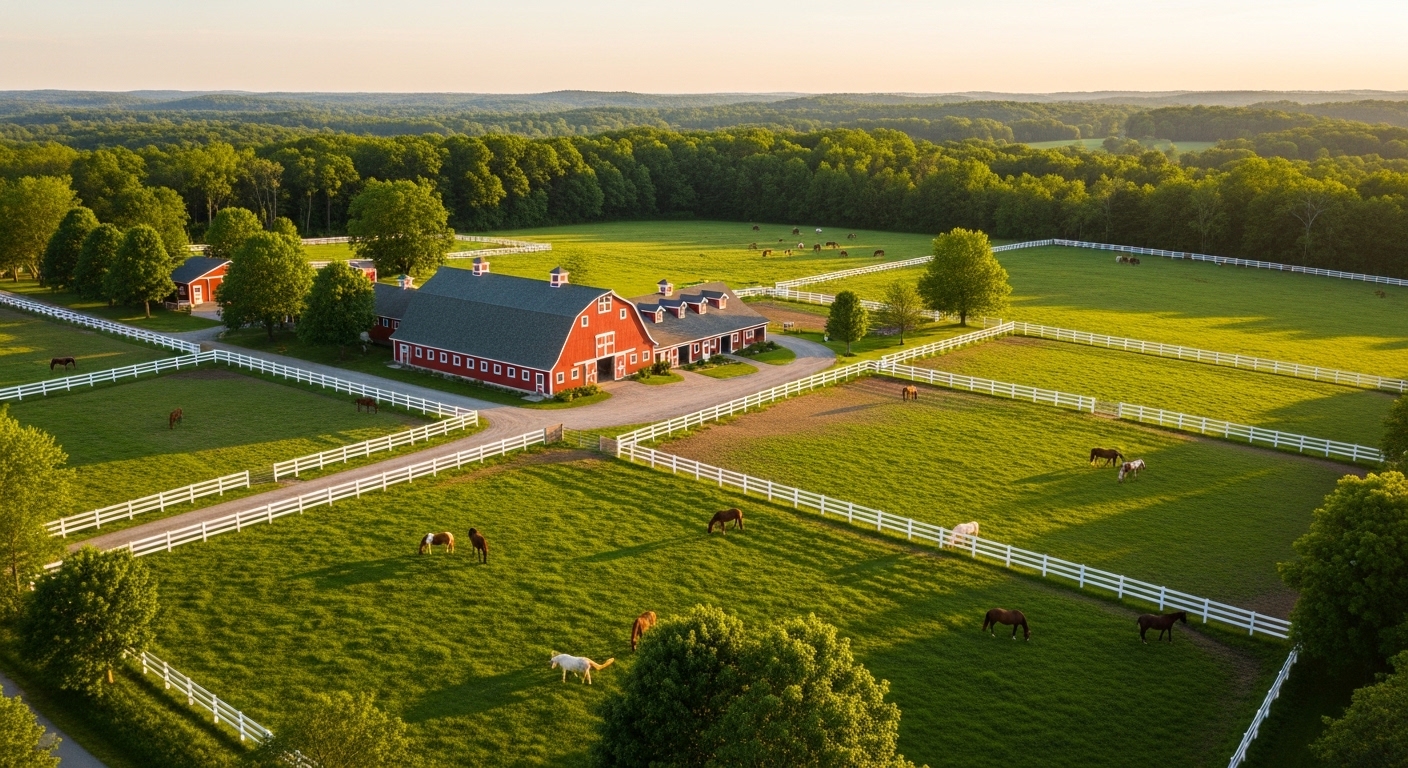
The House Is Not the Most Important Thing
Every buyer who tells me they are looking for a horse property gets the same warning: the house is not the most important thing on the list.
In a standard home search, you look at the kitchen, the layout, the yard. You run comps on price per square foot. You hire a home inspector who covers the roof, the mechanicals, the foundation. I mean, that process works fine for most properties.
For a horse property, it misses almost everything that matters.
The well is more important than the kitchen. The barn layout matters more than the master suite. Pasture drainage will determine whether your horses are healthy or stuck in a mud pit every spring. And the first question - before you fall in love with anything - is whether the town even permits you to keep horses on that parcel at all.
Buyers who treat horse property like a regular home search find themselves in one of two situations: they discover the deal-killer after they are already emotionally attached, or worse, they close and find out on move-in day. The problems are not hard to catch if you know what to look for. Very hard to fix after you have signed.
Zoning First, Everything Else Second
Connecticut municipalities write their own rules on horses. There is no statewide standard. Some towns require 1 acre per horse minimum, others require 2. Some require a special permit for equine use even in agricultural zones. Some allow horses by right on any property above a certain acreage. And some restrict horses in certain districts entirely - even on large, beautiful lots that look ideal from the photos.
Verify zoning before you get attached. That is the rule.
The towns with established equestrian communities - Granby, Goshen, Litchfield, Barkhamsted, Washington, Woodstock - tend to have horse-friendly zoning and active local networks worth knowing about. Southbury also has an active horse community and typically favorable acreage. But even in those towns, the specific parcel matters. The neighboring land use matters. Whether you are in the right zone for the right use matters.
I have seen buyers fall completely in love with a property before anyone verified what was actually permitted on the land. By the time the zoning issue surfaces - at inspection, at attorney review, at closing - the buyer is already emotionally and financially committed.
Basically, this is the step that separates a successful horse property purchase from a painful one. Get the zoning answer first. Everything else comes second.
What a Home Inspection Won't Cover
A standard home inspection covers the house. The barn, the well, the pasture, the fencing - none of it appears on a standard inspection checklist. Which is exactly the problem.
A horse property has infrastructure that needs real evaluation before you commit to anything. Here is what actually needs to be checked:
Barn and stable
- Stall dimensions - 12x12 feet minimum per horse
- Ventilation: good airflow is not optional for respiratory health
- Water and electric service confirmed to the barn, not just the house
- Ceiling height, footing, fire safety
Well and water supply
- Formal well yield test - non-negotiable
- Water lines confirmed to reach the barn
Pasture and fencing
- Soil drainage and slope - muddy paddocks cause real hoof problems
- Toxic plants: buttercup, yew, black cherry are common on CT properties and will not appear on any disclosure form
- Fencing and gates. You need 12 feet of clearance minimum for equipment access.
Access and logistics
- Driveway width and turning radius for a 60-foot trailer
- Road grade and gate clearance on move-in day
The well yield test is the one I would never skip. One horse is 10 to 15 gallons a day. Four horses in summer, drawing simultaneously with the household, can strain a marginal well fast. And the water line has to reach the barn - not just the house. You would be surprised how often that detail gets missed on a showing.
The Appraisal Problem Nobody Mentions
Standard appraisers undervalue equestrian improvements. This is not a criticism - it is a structural reality of how appraisals work. A custom 4-stall barn with water, electric, a hayloft, and proper ventilation is a real investment. But without relevant equestrian comparable sales in the area, a general appraiser often treats it as a minor outbuilding or assigns a fraction of its actual value. The buyer who understands what they are looking at and the appraiser who doesn't are working from very different numbers.
That gap creates financing complications. If the appraisal comes in below the purchase price because the appraiser could not find comparable equestrian properties, the buyer either covers the difference in cash or the deal falls apart. Horse property buyers need a lender familiar with agricultural transactions and an agent who knows how to document improvements in a way that supports the price.
Here's what I'd tell you right now if you are going into this process: understand the agricultural tax exemption status before you close on any property that carries one. Connecticut allows qualifying equestrian and farm properties to receive reduced property tax assessments under agricultural use designations - which is good for annual carrying costs. But at the time of sale, there can be conveyance tax implications and use restrictions that surface at the closing table if nobody addressed them beforehand. This is not something to discover on closing day.
What I'd Actually Tell You Before You Start
Don't start with Zillow.
The best horse properties in Connecticut frequently never reach the public market. Private farm sales, estate transitions, properties that move through the equestrian community before they ever become public listings - that is where a real portion of the inventory lives. If your search is limited to what is on the MLS right now, you are looking at a fraction of what is actually available.
Work with someone who has been in this specific world long enough to have that network. Not a general agent who handled one farm transaction - someone who has owned horses, evaluated barns, understood CT zoning town by town, and built relationships in the equestrian community over years of actual involvement. That knowledge is not in any licensing course. It comes from time in the saddle, so, so to speak.
At RYZE, we work with Meagan Scott, who has 30+ years of equestrian experience and has spent decades building real relationships across Connecticut's horse community. She walks properties the way an owner does, not just an agent - because she is one. If you are buying or selling a horse property in Connecticut, she is the right first call.
Long story short: this purchase deserves specialized knowledge from the start. The zoning question, the well test, the barn evaluation, the appraisal strategy - none of it is complicated if you have someone who already knows it cold. All of it becomes a problem if you don't. Get it right before you are in contract.
Frequently Asked Questions
How many acres do I need to keep horses in Connecticut?
It depends on the town - there is no statewide standard. Many CT municipalities require 1 to 2 acres per horse, but rules vary significantly. Some towns require a special permit for equine use even in agricultural zones; others allow horses by right above a certain acreage. Zoning needs to be verified for the specific parcel before you make an offer, not after.
Do horse properties in CT require a special inspection?
A standard home inspection will not cover the barn, well, pasture, or fencing - all of which are more important than the house itself on a horse property. You need someone who evaluates stall dimensions (12x12 feet minimum), well yield, water lines to the barn, drainage, toxic plant presence, fencing gate clearances, and trailer access. This requires a specialist who knows what they are looking for, not a general home inspector.
What is the well yield test and do I really need it?
The well yield test measures how many gallons per minute the well can produce under sustained demand. A single horse drinks 10 to 15 gallons a day, and that number goes up in summer or during hard work. Multiple horses plus household use can strain a marginal well quickly. The test also needs to confirm that water lines actually reach the barn. This is not optional on a horse property purchase in Connecticut.
Can I get a conventional mortgage on a horse property in Connecticut?
It depends on how the property is classified and whether improvements appraise correctly. Equestrian improvements like custom barns and riding arenas are frequently undervalued by standard appraisers who lack relevant comparable sales. This can cause appraisal gaps that complicate conventional financing. Horse property buyers often benefit from working with a lender experienced in agricultural transactions and an agent who can document improvements to support the purchase price.
What CT towns are best for horse properties?
Granby, Goshen, Litchfield, Barkhamsted, Washington, and Woodstock are among the most horse-friendly towns with established equestrian communities and favorable zoning. Southbury, Bethlehem, and Harwinton also have active horse communities. That said, specific zoning and parcel conditions vary even within horse-friendly towns, so verifying the exact rules for any property you consider is essential before you get attached.