

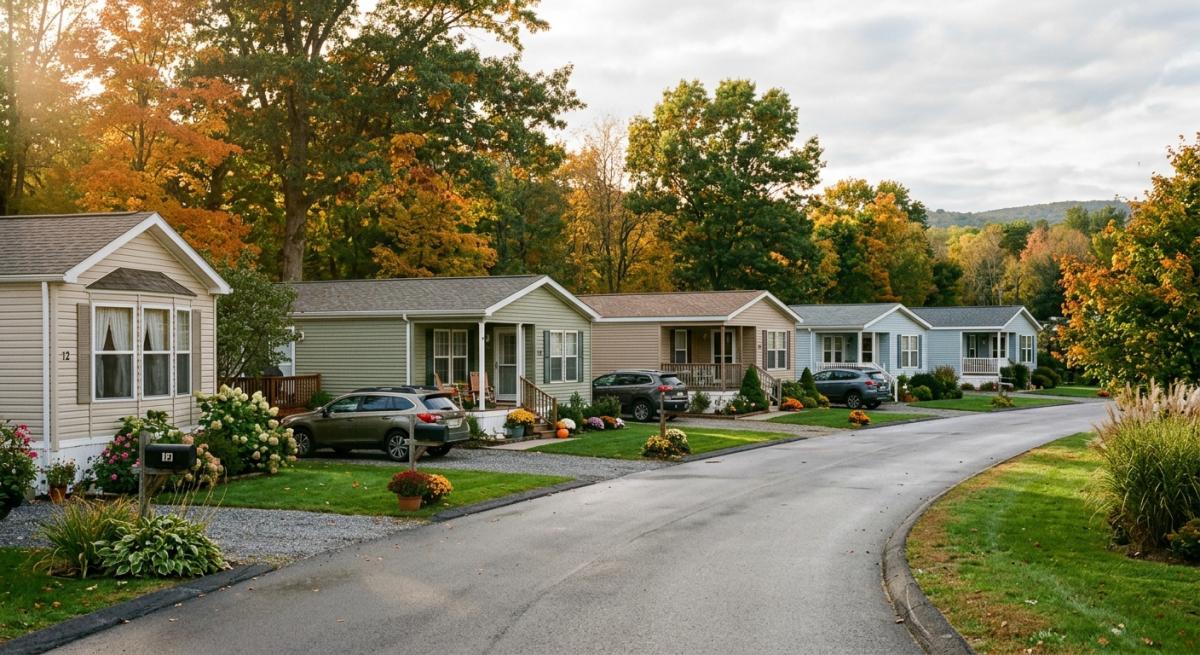
You're buying a house. Someone else owns the ground under it.
I get calls about this a few times a year. Someone finds a manufactured home listed for $150K to $250K, way under anything else on the market in Southington or Berlin, and they get excited before they understand what they're actually buying. Basically, in a land-lease community, you own the home. You do not own the lot it sits on. You're renting that ground from the park owner, and that relationship is governed by a completely different set of rules than a normal CT lease.
That distinction matters more than almost anything else in the deal. Most buyers figure it out after they've already fallen in love with the place, which is the wrong order to learn it in.
So let's go through what Connecticut law actually guarantees you as a park resident, what it doesn't, and what you need to confirm yourself before you sign anything.
What CT law actually guarantees on rent increases
Connecticut has real statutory protections for mobile manufactured home park residents. They're not nothing. But they're narrower than people assume, and I think it's worth being blunt about where the line sits.
- Written notice: the park owner must give you written notice of a proposed rent increase at least 30 days before a new rental term begins. No surprise increase mid-term, no verbal heads up that doesn't count.
- Comparable-lot requirement: the new rent has to be consistent with what's charged for comparable lots in the same park. The owner can't single you out and charge you double what your neighbor pays for the same size lot.
- No mid-lease increases: this one is flat and absolute. A park owner cannot raise your rent during the term of an existing rental agreement, for any reason. Once you're locked into a term, the number is the number until that term ends.
So that's the real protection. Notice, consistency, and a ban on mid-lease hikes. Nothing more.
What it doesn't guarantee - and this is the part people miss
Here's the thing most people don't realize until they're already living there: Connecticut has no cap on how much a lot rent can be increased. None. The law requires notice and it requires the new number to line up with comparable lots in the park, but there's no ceiling that says rent can only go up a certain percentage per year or per term.
That's just not something the state regulates here. I tell my clients that straight up, because it changes how you should think about long-term affordability. A home that costs $180,000 with a lot rent that feels manageable today could have that rent climb significantly at renewal. And as long as the park owner gives proper notice and the new rent matches what similar lots in the park are charging, that's legal.
This is the single biggest thing buyers underweight when they're comparing a manufactured home's low purchase price against a traditional home's higher price and property tax. The home might be cheaper. The lot rent is a separate, ongoing, and uncapped cost that you need to ask about directly - not estimate, ask the park management for their actual increase history over the last several years if they'll give it to you.
Not every park works the same way
I want to be clear about something because I've seen buyers assume all manufactured home communities operate identically, and that's just not the case. Some parks rent only the lot - you own the home outright and pay ground rent. Others rent the home and the lot together, which is a completely different financial and legal arrangement, closer to a long-term lease than a purchase.
Before you get attached to a specific property, find out which structure you're actually looking at. Ask the park management directly:
- Do residents own their homes, or are homes also owned by the park?
- What's included in the lot rent - water, sewer, trash, common area maintenance?
- What's the park's rent increase history over the last five years?
- Is there a resident association or any organized communication with ownership?
The specifics vary park to park, and a park in Enfield can run completely differently than one in Waterford. Don't assume.
Financing: chattel loan vs. a real-property mortgage
This is where things get more complicated than a normal CT home purchase, and it's worth understanding at a high level before you start shopping.
If the manufactured home is titled as personal property - which is common when it sits on a rented lot in a land-lease community - you're typically looking at a chattel loan. That's a loan secured by the home itself, similar to financing a car, not a mortgage secured by real estate. Chattel loans generally come with shorter terms and higher interest rates than a traditional mortgage. Fewer lenders offer them, too, compared to the number doing conventional mortgages.
If the home has been converted to real property - permanently affixed to land that you own or have a long-term interest in, and titled accordingly - you may qualify for a traditional real-property mortgage, which usually means better rates and terms.
This isn't me dodging the question - it's me telling you straight that this is exactly the kind of detail that needs a professional's eyes on your specific property, not a blog post's.
What I'd actually do if I were looking at one of these
If a client came to me wanting to buy a manufactured home in a Connecticut land-lease community, here's what I'd walk them through. First, get the park's rent increase history in writing, not a verbal promise. Second, read the actual lot lease agreement before you fall in love with the home - know your term length, what's covered, and what isn't. Third, talk to a lender who specifically does chattel loans or manufactured home financing. Not every mortgage lender touches these, and the terms differ enough that it changes your monthly math. Fourth, before you close, confirm with the town clerk how the home is titled and taxed, because that affects both your financing options and what happens if you ever sell.
The $150K to $250K price tag is real, and for first-time buyers priced out of Southington or Berlin's bidding wars, this is a legitimate path to ownership. I'm not telling you to avoid it. I'm telling you to go in with your eyes open about what you own, what you're renting, and what Connecticut law does and doesn't protect you on. Know what you're signing.
Frequently Asked Questions
Does Connecticut cap how much a mobile home park can raise lot rent?
No. Connecticut requires 30 days' written notice and requires the new rent to match comparable lots in the same park, but there's no statewide cap on the amount of the increase.
Can a park owner raise my rent in the middle of my lease term?
No. Connecticut law flatly prohibits a park owner from raising rent during the term of an existing rental agreement, for any reason. Increases can only take effect at renewal with proper notice.
Is a manufactured home mortgage the same as a regular home mortgage?
Often not. Homes titled as personal property typically use a chattel loan, which functions more like financing for a vehicle - shorter term, higher rate. Homes converted to real property may qualify for a traditional mortgage, but confirm the titling specifics with your town clerk or an attorney before assuming either way.
Do all manufactured home parks in CT rent just the lot?
No. Some parks rent only the lot while the resident owns the home outright. Others own and rent both the home and the lot. Ask park management directly which structure applies before you get attached to a property.
Is there anywhere to complain if I think a rent increase is unfair?
If your town has a local fair rent commission, nonseasonal park residents can file a complaint there. Not every CT town has one, so check with your town hall before you count on that option.