

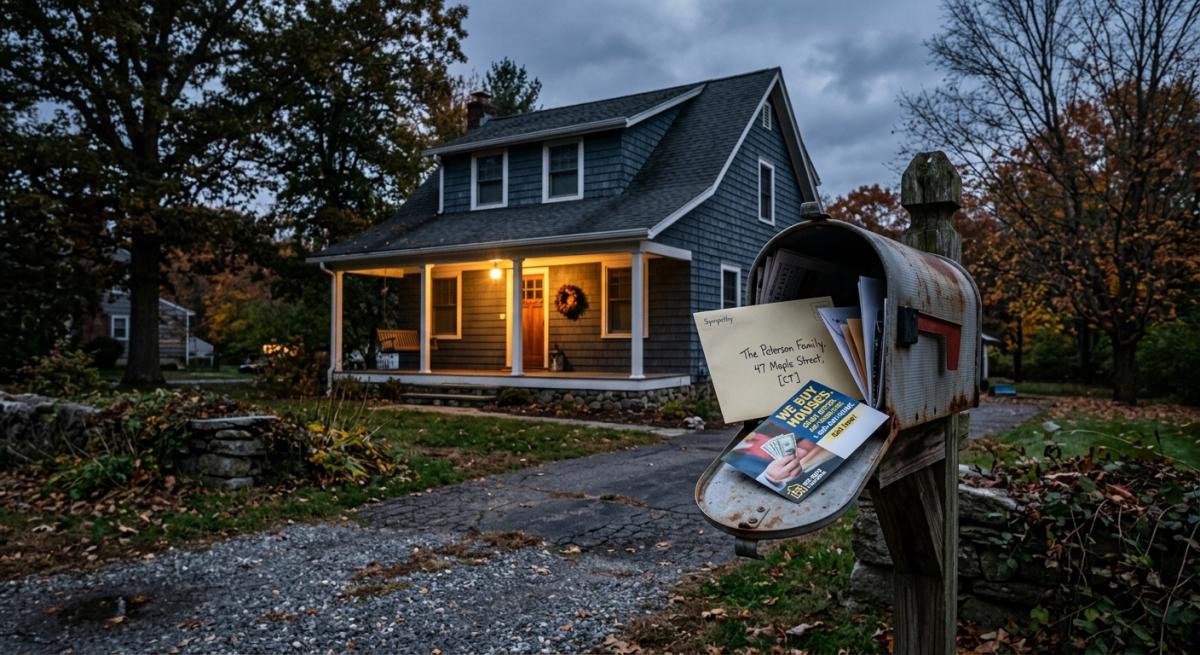
The postcards start before the obituary is even cold
Here's what actually happens. Someone passes away owning a house in Connecticut, and within a week or two the mailbox starts filling up. Cash-offer postcards. A realtor's note slipped through the door. A cousin mentions they know a guy who flips houses. Everybody wants to move fast.
Here's the thing most people don't realize: none of that matters yet. Not the postcards, not the realtor, not the eager buyer willing to pay cash and close in ten days. In Connecticut, if the house was owned solely by the person who died, it cannot be sold, mortgaged, or transferred to anyone until Probate Court says it can. Not the day after the funeral. Not when you're ready. When the court says so.
I've worked with a family going through this, and the confusion is almost always the same. They think the hard part is going to be cleaning out the house, getting it appraised, finding the right buyer. That stuff matters, but it's not the bottleneck. The bottleneck is legal authority - who has the right to sign on behalf of the estate - and that authority doesn't exist automatically just because someone is the oldest child or the person named in the will.
Being named executor in the will doesn't give you the keys
This is the single most common misunderstanding in these situations. A parent writes a will, names their adult child as executor, and that child assumes the title is basically already theirs to manage. It isn't. Being named in a will is a nomination, not an appointment.
So here's the sequence. The will has to be filed with the Probate Court in the town where the decedent lived. The court then formally appoints a fiduciary - usually the executor named in the will, or an administrator if there's no will. Only after that appointment does anyone have legal standing to act for the estate.
And even then, it's not automatic that the fiduciary can sell real estate. Connecticut law requires the Probate Court to specifically authorize the sale of real property in most cases, unless the will itself explicitly grants the executor the power to sell without further court approval. Some wills are written that way. Most that I've seen are not that specific, which means an extra step back to the court before a closing can happen.
Appointed as executor does not automatically mean authorized to sell. Those are two different approvals, and skipping either one means the deed can't move. That's not a technicality - it's the single most common reason a probate closing gets delayed at the last minute. No authority, no deal.
Why the small-estate shortcut everyone's heard of does not apply here
People bring this up to me constantly: "I thought small estates skip probate." They're thinking of Connecticut's simplified small-estate procedure, and yes, it exists, and yes, it's faster. But it does not apply the moment real estate is involved.
The small-estate shortcut only works when the decedent owned no real estate anywhere in their sole name - not just that the house falls under some dollar limit.
Think about what that means practically. A modest ranch worth a couple hundred thousand dollars in Waterbury disqualifies the estate from the shortcut just as much as a large home in Simsbury would. The dollar value of the real estate is irrelevant. Ownership of it at all is what knocks the estate out of the simplified track and into full probate administration.
This trips people up because they've heard "small estate, no probate" somewhere and assume it applies to them since the house isn't worth much. That's just not how it works. If there's a house titled solely in the decedent's name, you're going through full probate, full stop.
What you can actually do while you're waiting
This is where I try to keep families from feeling stuck, because waiting on the court doesn't mean doing nothing. There's a real list of things you can move forward on while the fiduciary appointment and sale authorization work through probate.
- Get the house appraised. Nothing about an appraisal requires legal authority over the property - you're just gathering information.
- Interview agents. Talk to a few, ask how they've handled probate sales before, see who actually understands the process versus who's just chasing the listing.
- Start basic prep. Cleaning, minor repairs, getting a sense of what the house needs - none of that requires a signed listing agreement.
- Request copies of the will and any prior deeds. The probate court and the decedent's attorney, if there was one, can usually help here.
- Keep the property secured and insured. Vacant homes need attention regardless of where things stand legally - pipes freeze, insurance lapses, and so on and so on.
What you cannot do is sign a binding listing agreement as the seller, or accept and execute a purchase offer, until the fiduciary has been appointed and, if required, the court has authorized the sale. An agent can absolutely start the groundwork with you. They just can't put a legally enforceable deal in motion until the authority is in place.
Why the agent you pick for this matters more than usual
I've seen agents who don't understand probate timelines push families to sign things prematurely, which just creates problems down the line when the paperwork doesn't match up with what the court actually authorized. That's a red flag. A good agent asks about the probate status before anything else - has a fiduciary been appointed, has the court granted sale authority, is there a will that already grants that power.
I worked a probate sale where siblings were splitting the estate and still sorting out who the court would appoint. We built the pricing strategy, did the condition assessment, and had the marketing plan ready before the paperwork cleared. The day the court granted authority, we weren't starting from zero - we went live. That gap between "authority granted" and "ready to list" is where families lose time they don't get back.
Use the waiting period productively, that's really the mindset I'd encourage. Don't treat it as dead time, and don't let a postcard buyer or an overeager agent convince you there's a shortcut around the court. There isn't one, not when real estate is involved. Prep now. List later.
Frequently Asked Questions
Can I sell my parent's house in CT before probate is finished?
No. The house cannot be legally sold, mortgaged, or transferred until the Probate Court appoints a fiduciary and, in most cases, specifically authorizes the sale. This applies regardless of how modest the home is or how ready a buyer might be.
Does Connecticut's small-estate process let me skip probate if the house isn't worth much?
No. The small-estate procedure only applies when the decedent owned no real estate in their sole name anywhere, regardless of value. Owning any house disqualifies the entire estate from that shortcut, even if the personal property is under the $40,000 threshold.
If I'm named executor in the will, can I sign a listing agreement right away?
Not until the Probate Court formally appoints you as fiduciary, and in most cases, grants explicit authorization to sell the real estate - unless the will itself already gives you that power. Being named in the will is a nomination, not automatic authority.
What can I do with an inherited CT house while waiting on probate?
You can get appraisals, interview real estate agents, do basic cleanup and repairs, and secure the property and its insurance. You just cannot sign a binding listing agreement or accept a purchase offer until the fiduciary has legal authority.
How do I find out if a will gives the executor power to sell without extra court approval?
The will itself needs to be reviewed, usually with the probate attorney handling the estate, to see if it contains specific language granting the executor sale authority. If that language isn't there, the fiduciary has to go back to the Probate Court for explicit permission. Then, and only then, can a sale close.