

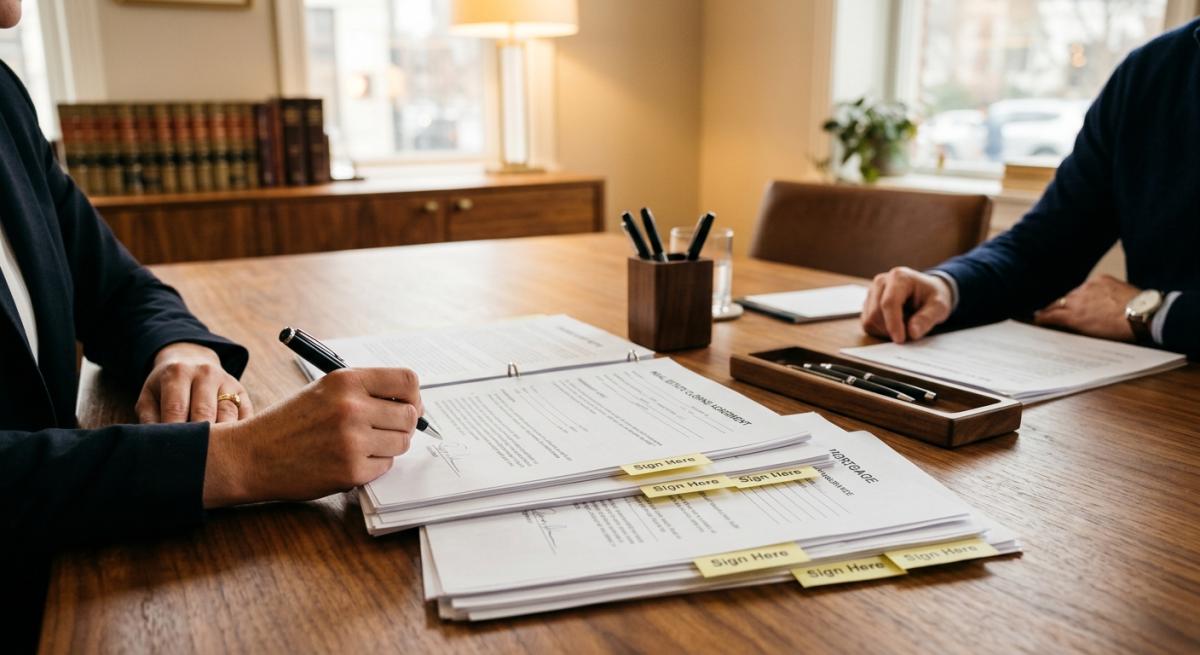
It's More Than Just Signing Papers
Closing day feels like a finish line. Six weeks of offers and inspections and mortgage underwriting and you're finally in the room. Most buyers picture sitting down, signing something, and walking out with keys.
What actually happens is about ninety minutes of signatures, wire transfer confirmations, and document explanations from your attorney. It's not complicated, but if you've never been through it before, the sheer volume of paperwork and the sequence of events can feel disorienting.
Connecticut is an attorney-closing state. That means unlike some states where a title company or escrow officer runs the closing, in CT you are required to have a licensed real estate attorney. Your attorney is the person who has been reviewing title, preparing documents, and coordinating with the lender for the past few weeks. On closing day, they run the show.
What Happens Before You Sit Down
The week before closing, your attorney receives a closing disclosure from your lender - a formal document showing every number in the transaction: your loan amount, your interest rate, your monthly payment, every closing cost, and exactly how much cash you need to bring to closing. Review this document carefully. Any number that surprises you should be questioned before you're at the table.
Your cash to close - down payment plus closing costs minus any credits from the seller - needs to arrive at your attorney's escrow account before closing, typically via wire transfer. Personal checks are not accepted for large amounts in Connecticut real estate transactions. The wire usually needs to be sent the business day before closing. Your attorney's office will give you wiring instructions. Verify those instructions by calling your attorney directly before sending any funds - wire fraud targeting real estate transactions is a real threat, and fraudsters do intercept emails and send fake wiring instructions.
Do a final walkthrough of the property, ideally within 24 hours of closing. This confirms the home is in the condition the contract requires - that repairs were made if agreed to, that the sellers have vacated, and that no new damage has occurred since you last saw it. If something is wrong at the walkthrough, it's much easier to address before closing than after.
Who Is in the Room
At a typical Connecticut closing, you'll see: your real estate attorney, sometimes your real estate agent, and you (and your co-buyer if applicable). The seller is rarely present. They most likely pre-signed documents earlier.
The lender is typically not present. Your loan officer has already done their job and is not needed at the table. The loan documents were prepared in advance and are already there.
Both attorneys have reviewed everything ahead of time and are largely there to explain documents, collect signatures, and confirm that all conditions have been satisfied. When transactions go smoothly - which is most of the time - closing is not adversarial. It's two sides of a transaction coordinating the final handoff.
The Sequence of What Gets Signed
Your attorney will walk you through the documents in order. Here's what you'll encounter:
Loan documents (the longest stack)
The promissory note - your personal promise to repay the loan under the stated terms
The mortgage or deed of trust - the lien that gives the lender rights to the property if you default
The closing disclosure confirmation
Various lender certifications and compliance forms
Title documents
The deed - the document that transfers ownership of the property from seller to buyer. The seller signs this. You receive it.
Affidavits confirming the sellers have no outstanding liens or claims against the property
Settlement documents
The HUD-1 or settlement statement showing the complete financial picture of the transaction
Any seller credits or agreed-upon adjustments
Proration calculations for property taxes and any prepaid items
Your attorney explains each document as you sign. Ask questions. This is not the place to rush. If something looks different than what you were quoted, say so.
After the Last Signature
When all documents are signed, your attorney funds the transaction - meaning they release the purchase funds from escrow to the seller's attorney and disburse the various closing cost payments to the appropriate parties. The deed is then recorded with the town clerk, which is the official legal transfer of ownership. In Connecticut, recording happens the same day in most cases, though the mechanics vary by town.
Keys. The agent or attorney hands over the keys when closing is funded. In most Connecticut transactions, this happens right at the table once the funding is confirmed. Occasionally there is a short wait while the wire transfer confirms.
Here's what I tell every buyer at the end: closing is the last step where things can still go sideways, even at the last minute. Lenders occasionally issue last-minute conditions. Wires occasionally take longer than expected. Final title searches occasionally surface issues that need to be resolved. None of these are common, but none are impossible. Stay reachable on closing day and don't schedule anything immediately after you expect to close. 90 minutes can become 3 hours if something needs to be resolved.
Bottom line: Connecticut closings are attorney-run and move methodically through a stack of documents. Review your closing disclosure when it arrives, wire your funds the day before, do your final walkthrough, and ask questions at the table. The process is designed to be thorough, not fast — and thorough is what protects you.
Frequently Asked Questions
How long does a Connecticut real estate closing take?
Most Connecticut residential closings take 60 to 90 minutes. More complex transactions — those with unusual title issues, last-minute lender conditions, or significant negotiated items — can take longer. Budget at least 2 hours so you're not rushed. The buyer's closing tends to take longer than the seller's closing because of the volume of loan documents.
Do I need an attorney for a CT real estate closing?
Yes. Connecticut is an attorney-closing state, which means a licensed real estate attorney must be present and conduct the closing. This applies to both buyers and sellers. Unlike some states where title companies run closings without attorney involvement, Connecticut requires the attorney as a professional safeguard for both parties. Budget $700–$1,500 for attorney fees depending on the transaction and attorney.
What should I bring to closing in Connecticut?
Bring a government-issued photo ID (driver's license or passport), your personal checkbook for small amounts (though most cash to close should have been wired in advance), and any documents your attorney asked you to bring — insurance binder, final utility information, etc. Your attorney will have everything else you need. Do not bring a large check — most CT attorneys require wire transfer for the cash to close.
Can a Connecticut closing fall through at the last minute?
Yes, though it's uncommon. Last-minute issues include lender conditions that can't be cleared in time, failed final title searches, funding delays, or a dispute surfacing from the final walkthrough. The most common last-minute disruption is a wire transfer timing issue. Keep your phone available all day, stay in contact with your attorney, and avoid scheduling immediate commitments right after your expected closing time.