

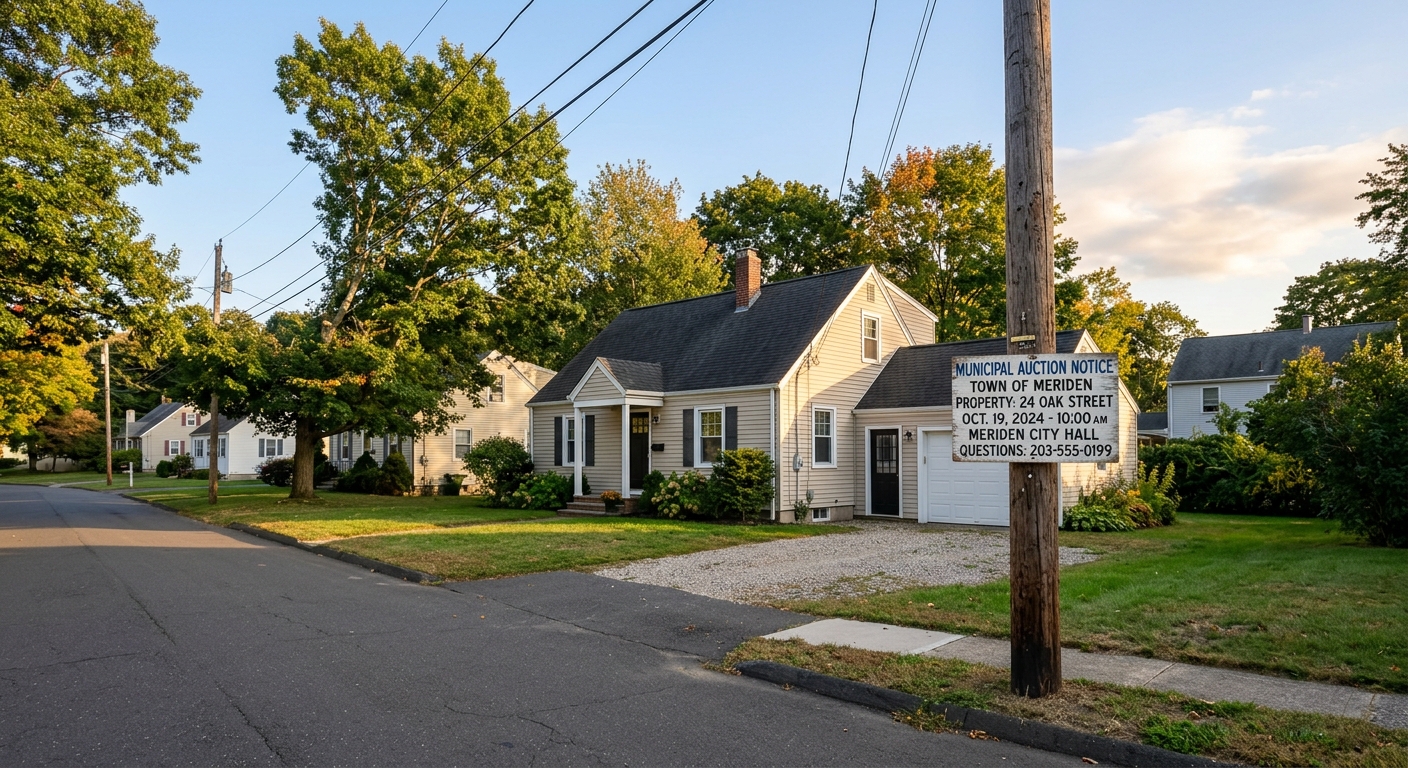
Two Different Processes, Two Different Outcomes
I wrote a post a while back explaining that Connecticut banks can't just auction off a foreclosed home like you see in the movies. That's true. Connecticut uses strict foreclosure in most cases - a judge decides, and the bank often ends up owning the house outright rather than selling it at a courthouse auction.
But here's what people mix up constantly, and it's an honest mistake because the word "foreclosure" gets thrown around for both situations. Unpaid property taxes are a completely different animal, governed by a completely different statute - Connecticut General Statutes §12-157. And under that law, your town absolutely can put your house up for public auction.
Not a lien. Not a certificate. The actual real estate. This surprises more people than almost anything else in this business, because everyone's heard scary stories about bank foreclosures and nobody's heard about tax sales until they're staring at one.
Your Town Runs Its Own Sale - There's No County System
Connecticut doesn't have county government the way most states do, so there's no county tax office running things behind the scenes. Each town's own tax collector handles delinquent accounts and runs its own sale from start to finish. Southington does its own. Berlin does its own. Newington, Glastonbury, Middletown - every one of them.
That means the process can look a little different depending on where you live, but the statutory framework underneath it is the same across the state. There's no central database you check, no state agency running the auction. It's local, it's public, and it's handled by people who know your town.
So I mention this because investors sometimes assume tax sale lists work like other states - one county portal, one calendar. In Connecticut, you're tracking individual municipalities, one by one. It's fragmented by design.
The Notice Window Is About 12 Weeks - Not a Surprise
One thing that genuinely bothers me when I see these situations is that the owner is rarely blindsided. The law requires the tax collector to notify the owner well before the sale, and the notices escalate as the date gets closer.
- Roughly 12 weeks before the sale - initial notice goes out
- Mid-range notices continue as the sale date approaches
- Final notices within the last few weeks before the sale, including published notice
So by the time a house actually reaches auction, the town has mailed notice, posted notice, and published notice in a sequence spanning about three months. If you're getting these letters and ignoring them, that's the moment to act - not after the sale happens. I tell my clients that straight up. Act on the first letter.
You Still Have Six Months After the Sale - But Don't Treat It as Breathing Room
Here's the part that trips people up the most. Even after the auction happens and someone wins the bid, you're not automatically out of your house. Connecticut gives the owner - and any mortgage holder or lienholder - a redemption period, generally six months from the sale date, to pay everything owed and keep the property.
That window shrinks to 60 days if the property is considered abandoned, or if a local ordinance sets a shorter period. So if you're still living in the house, you're generally looking at the full six months. If the house is vacant, the clock moves a lot faster.
Six months sounds like a long time, but it is not a plan. It's an emergency exit, not a strategy. Waiting until month five to figure out your next move is a bad bet, full stop.
During that redemption period, the winning bidder doesn't actually get clean title. The tax collector's deed is executed and lodged with the town clerk within about two weeks of the sale - but it stays unrecorded the entire six months. So the deed exists, it's sitting there, but ownership hasn't legally transferred yet. That's the mechanism that gives redemption teeth.
Redeeming Costs 18% Interest - And It Adds Up Fast
If you redeem, you're not just paying back the delinquent taxes. You owe the taxes, the costs of the sale, and interest at 18% per year on whatever the winning bidder paid for the property at auction.
18% a year is not mortgage-rate math. It's a lot more expensive than anything you'd normally finance a home with. The longer you wait inside that six-month window to come up with the money, the more that interest accrues.
People sometimes assume they can quietly work it out with the town on their own schedule. That's just not how it works. The statute doesn't bend because you had a rough year.
The Smarter Move Is Selling Before It Ever Gets to Auction
Here's the thing most people don't realize until they're already deep in notices and deadlines: you can sell the house yourself at almost any point before the sale date, and it solves the entire problem. Delinquent property taxes get paid off at closing out of your proceeds, same as a mortgage payoff or a conveyance tax. It's just another line item.
This is the conversation I wish more sellers had earlier. Once you're three or four notices deep, people freeze up - some out of embarrassment, some because they don't know selling is still an option at that stage. It almost always is, right up until the gavel drops at the auction itself.
Compare the two paths. Sell the house on your terms, and pay off what's owed, and walk away with whatever equity is left. Or let it go to auction, scramble through a six-month redemption window while owing 18% interest on top of everything else, and risk losing the house entirely if you can't pull the money together in time. Selling first is simply the better bet.
Frequently Asked Questions
Can a Connecticut bank auction my house the same way the town can for taxes?
No. Bank mortgage foreclosure in Connecticut is typically a judicial strict foreclosure process, which is different from the municipal tax sale process under CGS §12-157. They're governed by separate laws with separate timelines.
How much notice does a CT homeowner get before a tax sale?
The tax collector is required to mail, post, and publish notice in stages, starting roughly 12 weeks before the sale date and continuing closer to the sale. Owners are not supposed to be surprised by the auction date.
How long do I have to redeem my house after a Connecticut tax sale?
Generally six months from the sale date if you're still living in or using the property. That window drops to 60 days if the property is considered abandoned or under certain local ordinances.
What does it cost to redeem a house after a Connecticut tax sale?
You have to pay the delinquent taxes, the costs of the sale, plus interest at 18% per year on the amount the winning bidder paid. It gets expensive quickly, which is why acting early matters.
Is it better to sell my house than let it go to a tax sale?
In almost every case, yes. Selling before the sale date lets delinquent taxes get paid off at closing like any other debt, and you keep whatever equity remains instead of risking the home at auction.