

The House Doesn't Know You're Planning to List in April
Here's the thing most people don't realize about winter damage - it doesn't stay in winter. I had a seller once who'd had a pipe burst in a wall cavity, patched the ceiling, repainted, and figured that was the end of it. It wasn't. The stain bled back through the fresh paint before the house even hit the market, and we ended up disclosing it anyway. A water stain has a way of doing that.
Basically, if you're thinking about putting your house on the market this spring, the maintenance you skip this winter becomes next spring's paperwork. I'd rather deal with the pipe insulation now than the disclosure conversation in April.
So if you're not selling at all, just living in an older Southington colonial or a Berlin cape with a drafty attic - this still matters. A burst pipe in a wall cavity can run for hours before anyone notices. That's not a small repair. That's a claim.
Twenty Degrees Is the Number That Matters
Let me put it this way - pipes don't freeze because it's winter. They freeze because of one specific temperature threshold. Once the outside air drops to around 20°F, pipes running through unheated or poorly insulated spaces - attics, basements, crawl spaces, exterior walls - are at real risk of freezing. In Central Connecticut that's not a rare cold snap. That's a Tuesday in January.
A lot of the housing stock we work with in Southington, Berlin, and Plainville is older. Basement plumbing that was fine in 1975 is still running through the same uninsulated joist bays today. Nobody thought about it because nobody had to - until a week of single digits hits and a pipe along an exterior wall splits open.
Once a pipe freezes and the ice expands, the pipe doesn't always burst right away. Sometimes it holds until the thaw, and that's when you get water everywhere at once. That's the part people don't expect - the damage often shows up on the warm day, not the cold one.
How an Ice Dam Actually Forms - and Why Your Attic Is the Real Problem
Ice dams get blamed on the roof. The roof is innocent. The attic is guilty.
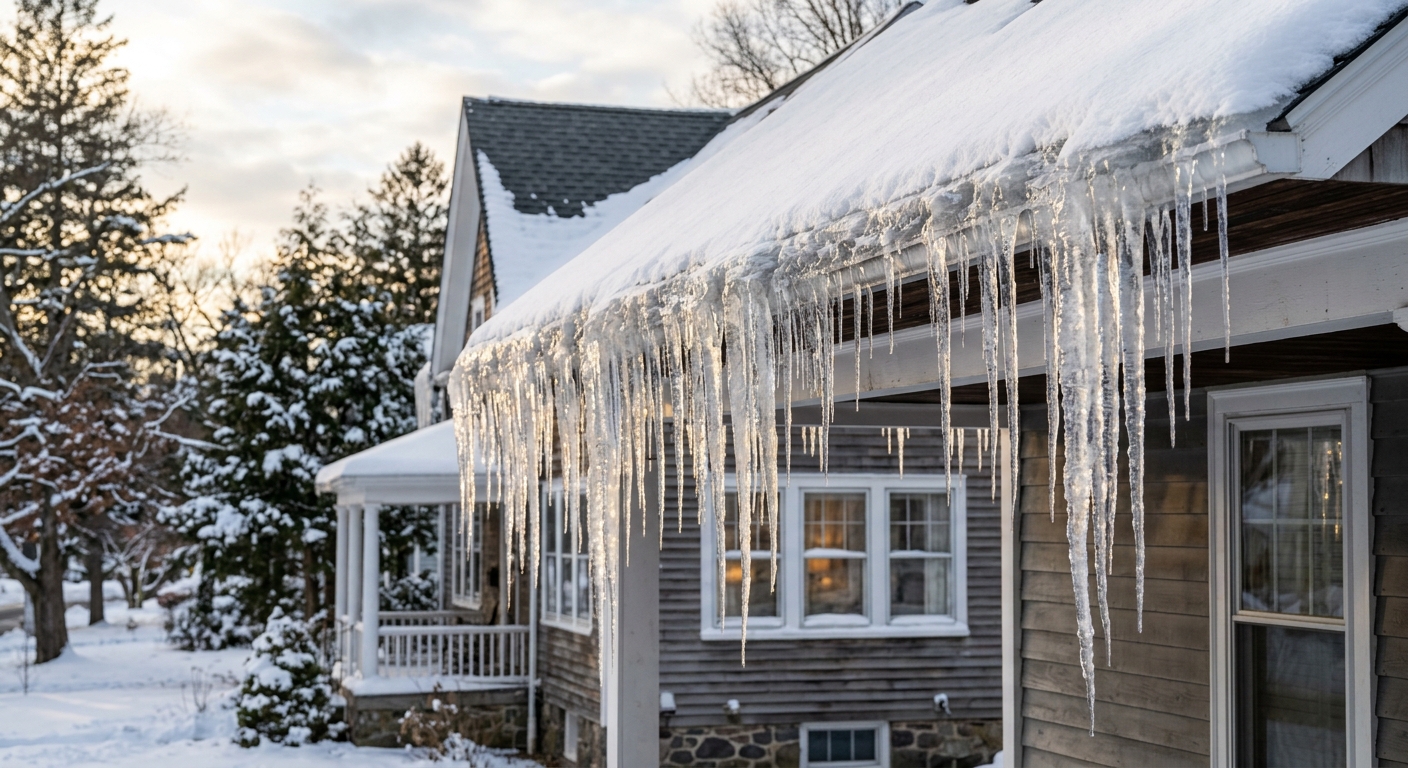
Basically, here's what happens: heat escapes from the living space up into the attic, because the attic isn't sealed or insulated well enough to keep it out. That warm air heats the underside of the roof deck, which melts the snow sitting on top of it. The meltwater runs down the roof until it hits the eaves - the part of the roof hanging past the exterior wall, which stays cold because there's no heated space underneath it. The water refreezes right there and builds up into a ridge of ice.
That ridge is the dam. And once it's built, more meltwater coming down the roof has nowhere to go. It backs up, works its way under the shingles, and finds its way into your attic insulation, your ceiling, your walls.
A new roof doesn't fix an ice dam. I've seen homes with brand new roofs that still get ice dams every year, because nobody addressed the actual cause. The shingles were never the issue.
What This Costs You at Resale, Not Just in January
So you had a pipe burst, or an ice dam leak stained a bedroom ceiling. You got it fixed. Life moved on. Then you list the house in April and three things happen that you didn't expect.
- The disclosure form. Connecticut requires sellers to complete a Residential Property Condition Disclosure Report. A past water event that caused damage is the kind of thing that belongs on that form. Skip it and you're not avoiding the problem, you're creating a bigger one - and if you don't provide the disclosure at all, the seller owes the buyer a $500 credit at closing regardless.
- The insurance claim history. If you filed a claim for the burst pipe or the ice dam leak, that's now part of the property's claim record. Buyers and their insurance agents can see patterns. One claim isn't a dealbreaker. A pattern makes people nervous.
- The inspector's flashlight. A repainted ceiling can look perfect to the eye and still show a stain under certain light, or the inspector pulls up attic insulation and finds it compressed and water-stained where the leak traveled. Once that's flagged, you're explaining it anyway - just later, with less control over the story.
Disclose it straight, explain what you did to fix it and prevent it again, and move on. Buyers can live with an honest explanation. They can't live with finding out you hid something - that almost always costs more at the negotiating table than the honest version ever would.
The Prevention List That Actually Matters
Forget the generic "winterize your home" list. For these two specific failure modes - frozen pipes and ice dams - here's what actually moves the needle, especially in older Central Connecticut housing stock with uninsulated attics and basement plumbing running along exterior walls.
| Action | Why It Matters |
|---|---|
| Air-seal the attic floor | Stops warm air from escaping into the attic in the first place - this is the actual fix for ice dams, not the roof |
| Add attic insulation to current recommended levels | Keeps the attic cold and uniform, so snow melts evenly (or not at all) instead of melting near the ridge and refreezing at the eaves |
| Insulate pipes in unheated spaces | Basements, crawl spaces, garages, and exterior walls - foam pipe sleeves are cheap insurance against a cracked pipe |
| Keep interior temps at 55°F minimum, even when away | Insurers and plumbers consistently point to 55°F as the floor - don't drop the thermostat lower to save on heat while traveling |
| Install roof rakes for snow removal | Pulling snow off the lower few feet of roof after a storm removes the fuel source for an ice dam before it can build |
| Disconnect and drain exterior hose bibs | Simple, often skipped, and a common source of a frozen and split spigot line |
These are the ones that actually prevent the expensive failures, not just the inconvenient ones. That is the whole game.
What I'd Actually Do
If I'm a homeowner right now, especially in an older house in Southington, Berlin, or Newington with an attic that's never been upgraded, I'm not waiting until after the holidays. I'm getting the attic air-sealed and insulated before the first real cold snap. That one project solves both problems at once - it keeps heat out of the attic, which stops ice dams, and it keeps the house running more evenly, which protects pipes near exterior walls. I'm insulating any exposed pipe in the basement or garage this week, not in January after something's already cracked. And if I know I'm traveling or leaving the house empty for any stretch this winter, the thermostat does not go below 55°F. Period.
But if I'm planning to list in spring, I'm also keeping a simple record now - what I did, when, and why - so that if anything does happen, I'm walking into the disclosure conversation with a clear story instead of a surprise. Buyers don't punish honesty. They punish houses that feel like they're hiding something.
Frequently Asked Questions
At what temperature do pipes actually start freezing in a Connecticut home?
Pipes face real risk once outside temperatures drop to around 20°F, especially in unheated or poorly insulated spaces like attics, basements, and crawl spaces. In Central Connecticut that threshold gets crossed regularly in January and February.
Does a new roof prevent ice dams?
Not by itself. Ice dams form because warm air escapes from the living space into the attic and melts roof snow, which then refreezes at the cold eaves. A new roof with the same under-insulated, poorly sealed attic underneath it will still get ice dams.
Do I have to disclose a past frozen pipe or ice dam leak when I sell my CT home?
Connecticut requires sellers to complete a Residential Property Condition Disclosure Report, and past water damage is the kind of item that belongs on it. Skipping the disclosure doesn't avoid the issue - it just means the seller owes the buyer a $500 credit at closing if no disclosure is provided at all.
What temperature should I keep my house at if I'm traveling in the winter?
Keep the interior temperature at a minimum of 55°F even when the home is unoccupied. Dropping it lower to save on heating costs is one of the most common reasons pipes freeze while owners are away.
Will a water damage claim affect my ability to sell the house?
One past claim usually isn't a dealbreaker, but it becomes part of the property's insurance claim history that buyers and their agents can see. Combined with visible damage an inspector flags, it's better to disclose it clearly with an explanation of what was fixed rather than let a buyer discover it on their own.