

It's never the squatter story you're picturing
Whenever I bring up adverse possession to a client, their mind goes straight to some dramatic story - a stranger moves into an empty house, lives there for years, and somehow ends up owning it. That's not what this is, at least not in Connecticut, and not in the deals I actually see.
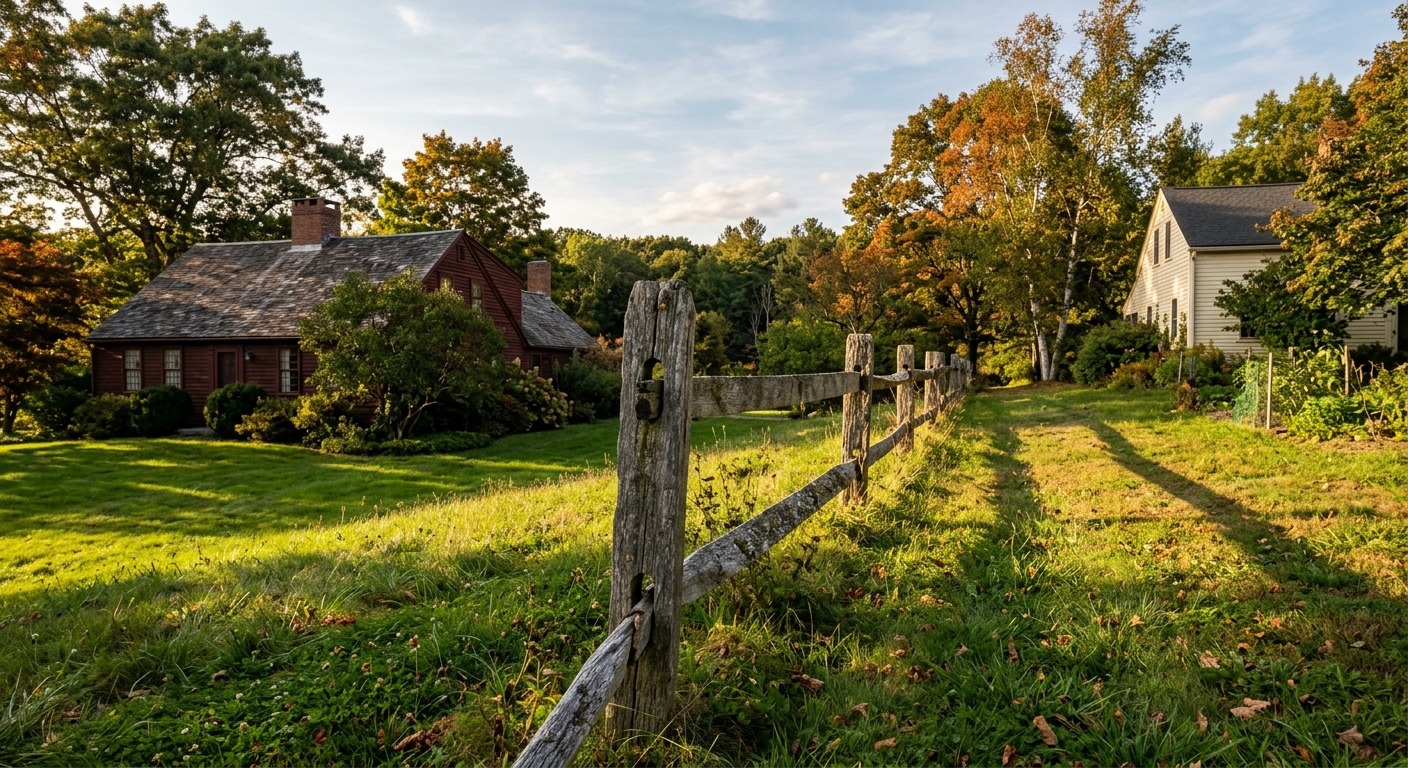
What really happens is a fence gets built eighteen inches onto the neighbor's side in 1998 and nobody ever measures it again. A driveway gets repaved and widened a little, creeping over the line. A shed goes up near the back corner of a lot because that's where the flat ground is. Thirty years later, two sets of grandkids inherit the houses, somebody orders a survey to sell, and suddenly there's a legal question nobody saw coming.
So this comes up more in the older, rural-feeling pockets around Southington, Cheshire, and Burlington than it does in a newer subdivision with tight, well-documented lot lines. Older neighborhoods had looser surveying standards decades ago, and nobody was checking a plot plan every time they put in a garden bed. No scheming required.
Connecticut's 15-year rule, in plain language
Basically, Connecticut law - Connecticut General Statutes Section 52-575 - says that if someone possesses land that isn't legally theirs for 15 straight years, under the right conditions, they can end up with legal title to it. Not the whole house, usually. Just the strip of land in question - the part the fence, shed, or driveway sits on.
Fifteen years sounds like a long time, and it is. But a fence doesn't know it's on a clock. Nobody sends a calendar reminder. The encroachment just sits there, year after year, until it either gets challenged or it doesn't.
This law exists to settle long-standing boundary realities, not to reward somebody for sneaking onto your land last spring. It only matters once possession has gone on, unchallenged, for the full statutory period. Time is the whole test.
The five things a claimant actually has to prove
This is where I see people get confused. Adverse possession isn't automatic just because fifteen years passed. The person claiming the land has to prove every one of these, for the entire period:
- Open and visible: The use has to be obvious, not hidden. A fence everyone can see, not something tucked away where the real owner would never notice.
- Exclusive: The claimant is using the land as their own, not sharing it with the actual owner.
- Continuous: No long gaps. The use has to run the full 15 years without a real break.
- Hostile: Without the owner's permission. If the actual owner said
Frequently Asked Questions
placeholder
placeholder
Does adverse possession in Connecticut mean someone can take my whole property?
No. In nearly every case Peter sees, it's just the strip of land where a fence, shed, or driveway encroaches - not the whole lot. These situations usually come from old fences or driveways that crept over a line decades ago, not someone trying to claim an entire house.
How long does someone have to occupy land before they can claim it in CT?
Connecticut General Statutes Section 52-575 requires 15 straight years of uninterrupted possession before an adverse possession claim can even be considered. That possession also has to be open, exclusive, continuous, and hostile for the entire period. Presence alone proves nothing.
Why does adverse possession come up more in older CT towns?
Older, rural-feeling pockets around Southington, Cheshire, and Burlington had looser surveying standards decades ago, so boundary lines were never checked as closely as they are in newer subdivisions. A fence or shed built a little over the line in the 1990s can sit unnoticed for years until someone finally orders a survey.
When does an adverse possession issue usually get discovered?
It almost never surfaces because a neighbor is scheming - it shows up when a buyer's attorney or lender orders a current survey and the fence or driveway doesn't match the deed. That's often decades after the encroachment first happened, sometimes when grandkids inherit the properties and go to sell.