

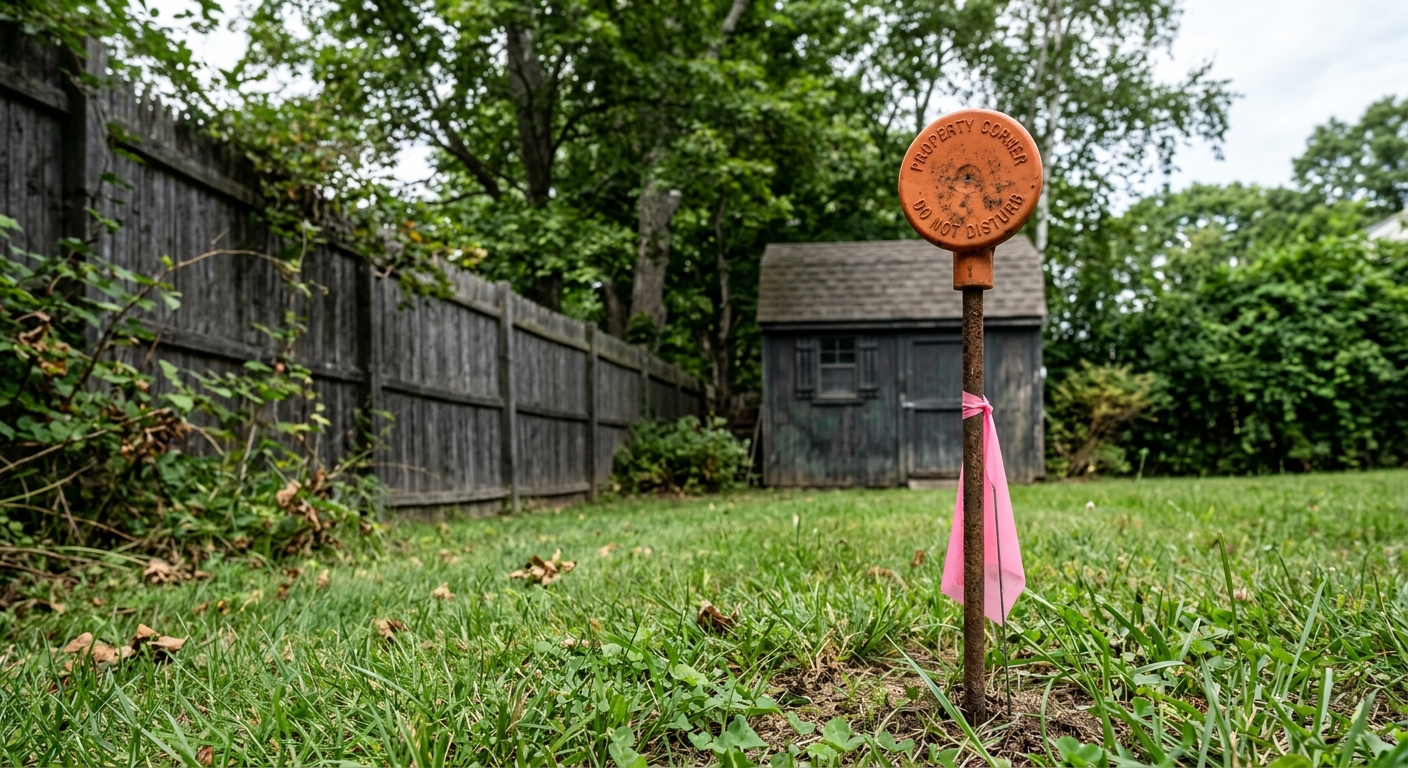
Nobody's going to tell you to get one
Here's the thing most buyers don't realize until it's too late: your lender is not going to ask for a survey. Your title company isn't going to push for one either. Long story short, both of them have figured out they don't need it anymore.
Lenders used to require a current survey before closing on just about every purchase. Now they get automatic survey coverage through their title insurance policy, so from the bank's perspective, the box is checked. No survey required, no survey ordered, closing moves forward.
That's fine for the bank. The bank has its interest protected either way. You, the buyer, are in a different spot. Nobody is protecting your interest the way a lender protects theirs - and that's a gap most people don't know exists until they're already living in the house. You're on your own here.
What a survey actually shows that a title search never will
A title search and a survey sound like they do the same job. They don't - and conflating the two is the single most common mistake I see buyers make.
A title search tells you who owns the property, whether there are liens on it, and whether the chain of ownership is clean. Basically, it's a paper check. It confirms the seller has the legal right to sell you what they're selling.
A survey tells you something completely different - where the property actually sits on the ground. That includes:
- Exact boundary lines, measured and marked, not estimated from an old map
- Whether a fence, shed, driveway, or addition sits on the neighbor's side of the line, or vice versa
- Recorded easements - utility companies, shared driveways, right-of-way access for a neighbor
- Whether the structure on the lot matches what's on file with the town
A title search will never catch any of that. It's not designed to. I've walked properties where the town card described a small ranch and I pulled up to a two-story addition nobody permitted. That's not a title problem. That's a survey and due-diligence problem, and they're not the same animal.
The survey exception is the part nobody reads
Most title insurance policies include something called a survey exception. Basically, it's a clause that says the policy does not cover boundary-line disputes or encroachments unless you provide a current, certified survey to have that exception removed.
Most buyers have no idea this language exists. They assume title insurance covers everything property-related. It doesn't. If your neighbor's shed is two feet over the line, or your new driveway was poured partially on an easement, title insurance is not going to bail you out, because that exact scenario is the one it carved itself out of covering.
So the policy you're paying for at closing, the one that's supposed to protect you, has a built-in gap that only a survey can close. That's not a small detail. That's the whole point of this post.
What it actually costs in Connecticut
A standard residential boundary survey in CT typically runs in the $600 to $1,500 range, depending on lot size, location, and how complicated the property is. Wooded lots, irregular shapes, rural parcels with unclear deed descriptions - those push toward the higher end.
Compare that to attorney fees of $700 to $1,500 that you're already budgeting for at a CT closing, or the inspection you're already paying $400 to $1,500 for. A survey sits right in that same range. It's not a budget-breaker. It's a line item people skip mostly because nobody mentions it, not because it's unaffordable.
When it's worth the money
I wouldn't tell every buyer to get one. That's just not realistic, and it's not necessary for every property. But there are specific situations where skipping it is a mistake, full stop.
- Older homes. Decades of additions, fences, sheds, and driveways poured by different owners with different ideas about where the line actually is.
- Rural or larger lots. Fewer visible markers, longer boundary lines, more room for the deed description and the actual ground to disagree with each other.
- Additions or outbuildings. A garage, a shed, a pool, anything built after the original survey was done. If it wasn't there when the last survey was filed, nobody has confirmed it's actually inside the lines.
- Unclear or old deed descriptions. Some older CT deeds describe boundaries using landmarks that no longer exist - a tree, a stone wall, a fence post from 1960. That's a red flag for anyone buying the property today.
In any of these, a few hundred dollars to confirm the lines is cheap insurance against a much more expensive argument down the road.
When you can reasonably skip it
On the other side, there are situations where I tell my clients it's reasonably skippable - not because surveys don't matter, but because the risk is already low.
- New construction. The lot was just surveyed and staked as part of the build. The lines are fresh and documented.
- Recent subdivisions with a clean recorded map. If the parcel was created in the last several years with a filed, professional survey map on record at the town, you're working off current data, not a guess from 1975.
A survey is about closing a gap between what the paper says and what's actually on the ground. If that gap was closed recently by a professional, you don't need to pay to close it again.
What I'd actually do
If I'm advising a buyer on an older home in Southington, Berlin, Farmington, Cheshire, or Glastonbury - towns with a lot of mid-century housing stock and decades of owner-added fences, sheds, and driveways - I'm telling them to get the survey. It's a few hundred dollars against a problem that could cost a lot more money to untangle later. And it removes the survey exception from your title policy so you're actually covered.
But if it's new construction or a lot inside a subdivision built in the last few years with a clean recorded map, I tell clients to save the money. The documentation already exists and it's current.
So that's the real decision framework. It's not about fear. It's about matching the cost of the survey to the actual age and complexity of the property you're buying. That's the whole game.
Frequently Asked Questions
Do I legally need a land survey to buy a house in Connecticut?
No. CT does not require buyers to obtain a land survey before purchasing residential property. It's optional, and most lenders no longer require one either since they get automatic coverage through their title insurance policy.
Will title insurance cover a boundary dispute if I skip the survey?
Probably not. Most title policies include a survey exception that excludes coverage for boundary disputes and encroachments unless you provide a current, certified survey to remove that exception before closing.
How much does a land survey cost in Connecticut?
A standard residential boundary survey typically runs $600 to $1,500, depending on lot size, location, and how complicated the property's boundaries are. Larger or irregular lots tend toward the higher end.
Is a survey worth it on new construction?
Usually not necessary. New construction lots are typically surveyed and staked as part of the build process, so the boundary data is already current and on file.
What does a survey show that a title search doesn't?
A title search confirms legal ownership and checks for liens. A survey shows the physical reality on the ground - exact boundary lines, easements, and whether fences, sheds, or driveways actually sit within the property lines.